
Ever wonder why everyone suddenly wants the same trainers, or...
 Economics1 vues·Mis à jour Jun 9, 2026·5 pages
Key Factors Influencing Consumer Demand
1 / 5
1
of 5
Understanding Demand Basics
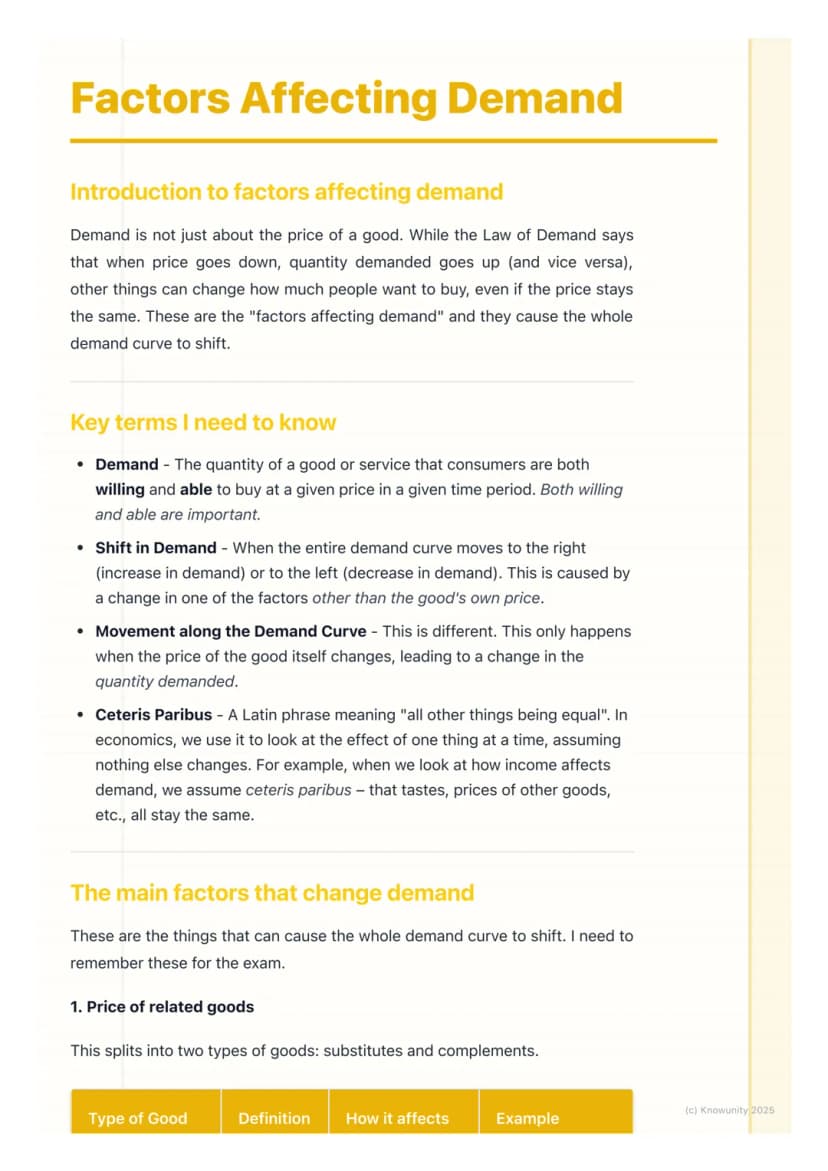
Demand isn't just about price - it's about how willing and able people are to buy something at a given price. Think of it like this: you might want the latest iPhone, but if you can't afford it, there's no actual demand from you.
The Law of Demand tells us that when prices drop, people generally buy more (and vice versa). But here's where it gets interesting - sometimes demand changes even when the price stays exactly the same.
When something other than price affects how much people want to buy, the entire demand curve shifts. This is completely different from just moving along the curve when price changes. Understanding this difference will save you marks in exams!
Key Tip: Remember ceteris paribus - "all other things being equal". Economists use this to study one factor at a time, assuming everything else stays constant.
2
of 5
Related Goods: Substitutes and Complements
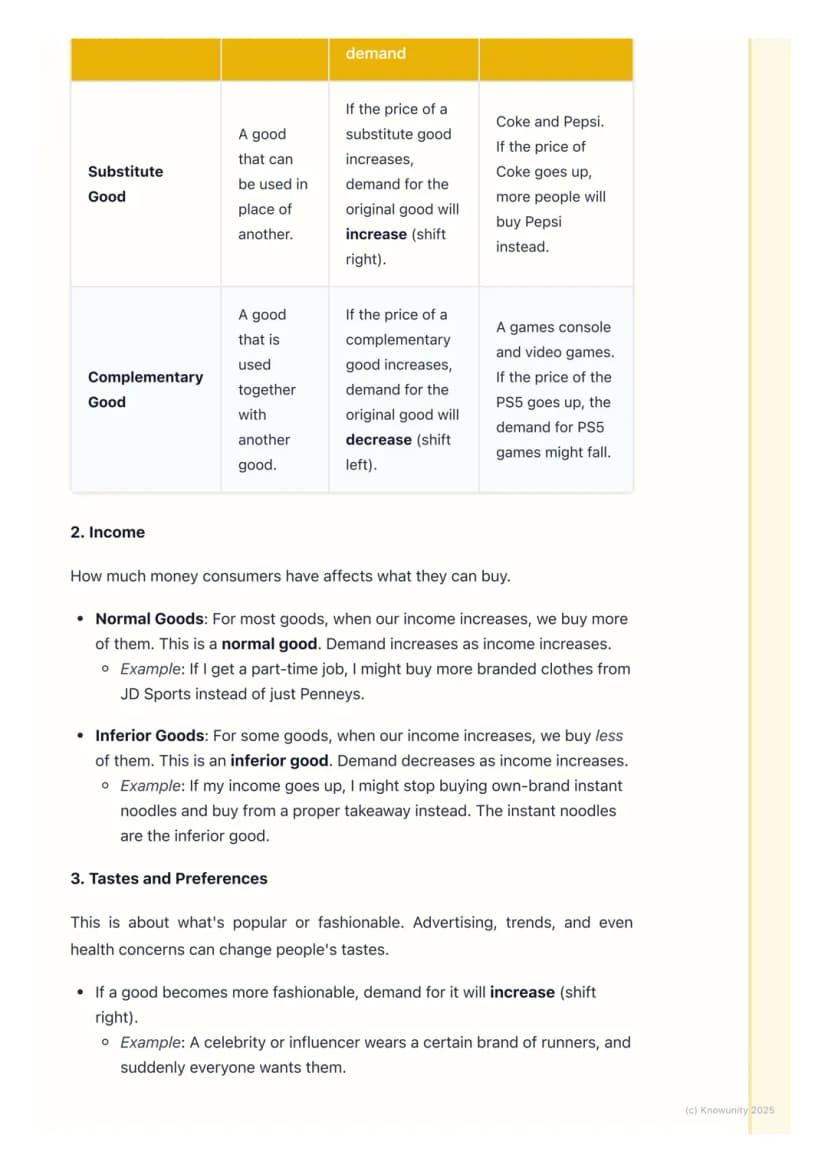
Substitute goods can replace each other - like Coke and Pepsi, or Netflix and Disney+. When Coke's price jumps up, suddenly Pepsi looks more attractive, so demand for Pepsi increases even though its price hasn't changed.
Complementary goods work together - think gaming consoles and games, or cars and petrol. If PlayStation 5 prices soar, fewer people buy the console, which means fewer people need PS5 games. So demand for games drops too.
This is dead useful for understanding real-world scenarios. When petrol prices spike, demand for fuel-efficient cars goes up whilst demand for gas-guzzling SUVs falls.
Quick Check: If two goods are substitutes and one gets more expensive, demand for the other increases. If they're complements and one gets pricier, demand for the other decreases.
3
of 5
Income Effects: Normal vs Inferior Goods
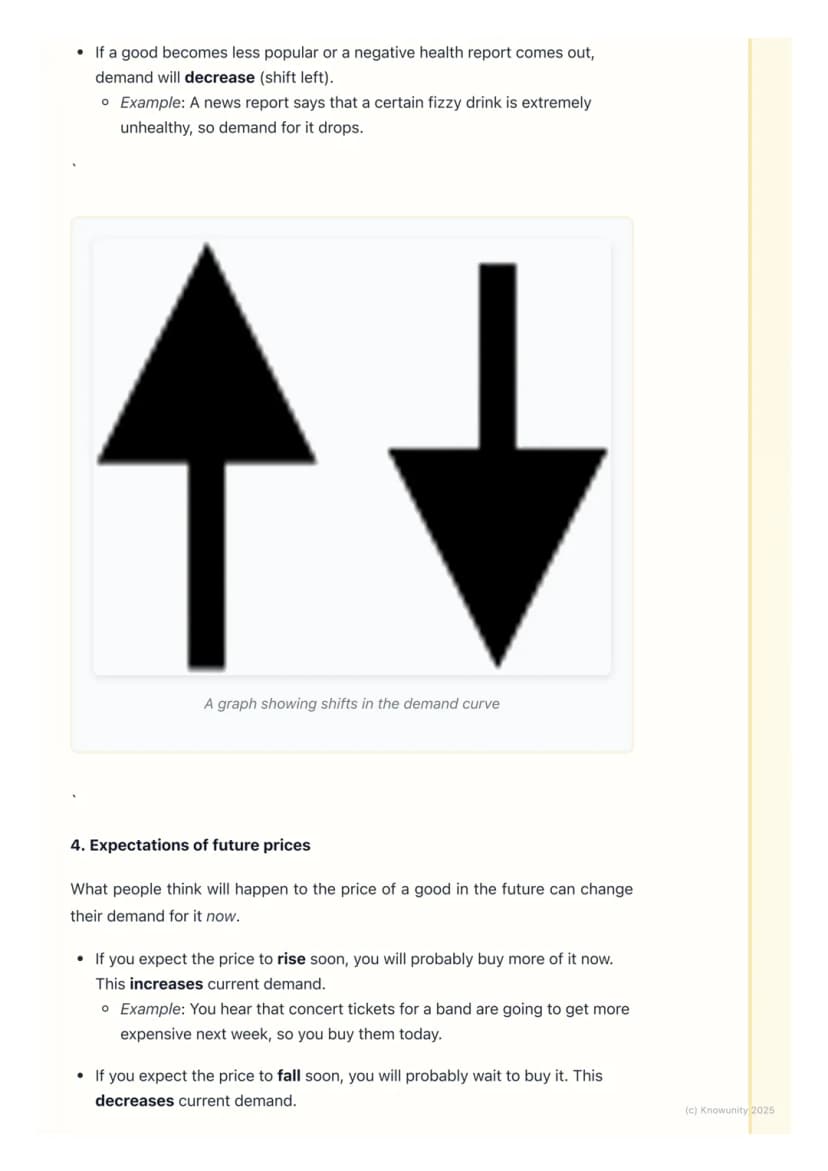
Your income massively affects what you buy, but not all goods react the same way. Normal goods are things you buy more of when you get richer - branded clothes, restaurant meals, or the latest tech.
Inferior goods work backwards - when your income rises, you actually buy less of them. Think own-brand instant noodles or second-hand clothes. Once you can afford better alternatives, you ditch the cheap stuff.
This explains why Penneys might see less demand during economic booms whilst Brown Thomas sees more. People trade up when they've got extra cash flowing in.
Real Example: Getting a part-time job means you might stop buying supermarket own-brand everything and start choosing branded products instead.
4
of 5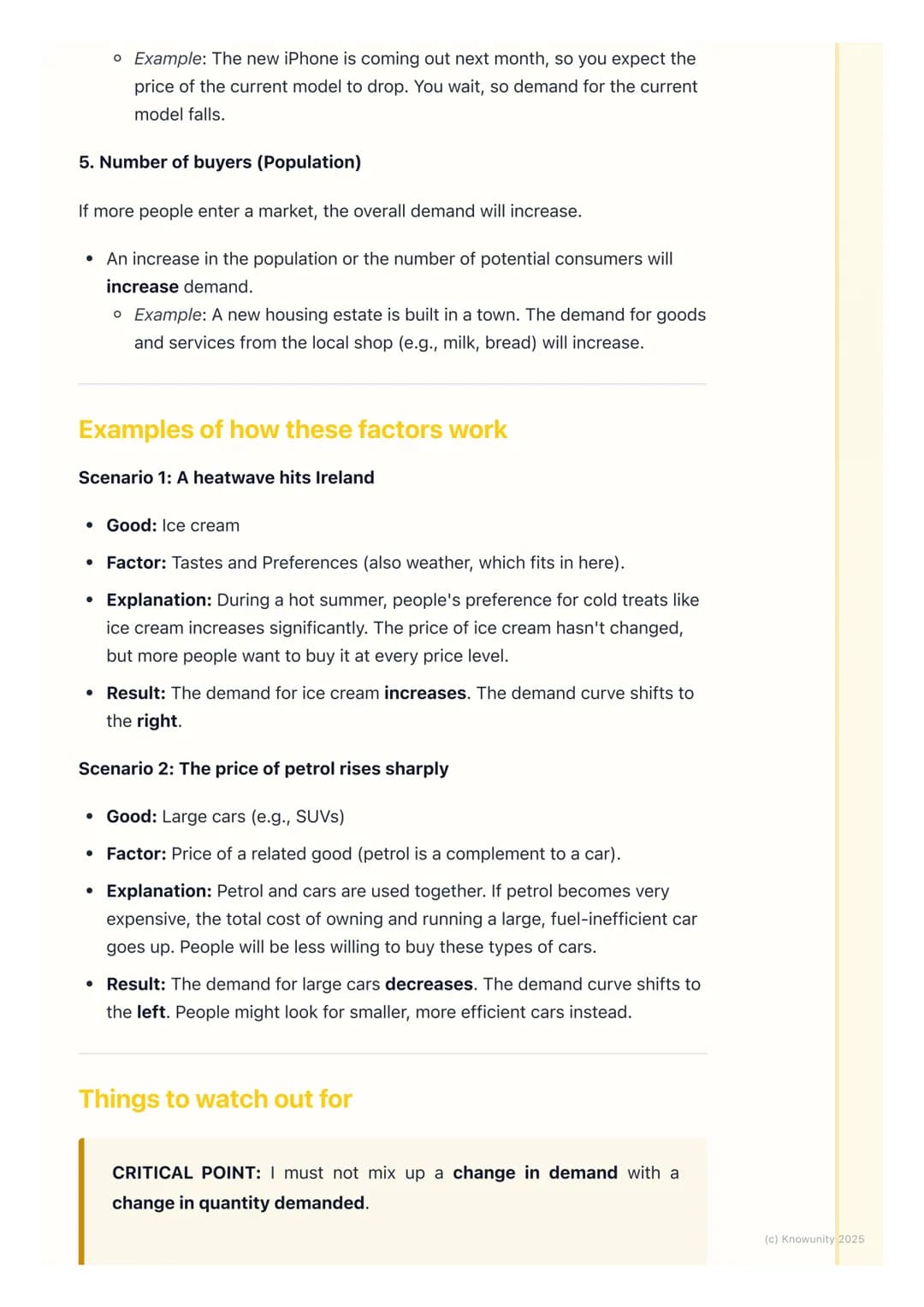
Tastes, Expectations, and Population Changes
Tastes and preferences drive massive demand shifts. One TikTok trend can make certain trainers explode in popularity overnight. Celebrity endorsements, health scares, or just changing fashions all shift demand curves dramatically.
Future price expectations create interesting behaviour. If you think concert tickets will cost more next week, you'll buy them now - increasing current demand. But if you expect phone prices to drop when the new model launches, you'll wait.
Population changes are straightforward but powerful. More people in an area means higher demand for local services. New housing estates boost demand for everything from groceries to hairdressers.
Exam Alert: Don't confuse a movement along the demand curve (price change only) with a shift of the entire curve (caused by these factors).
5
of 5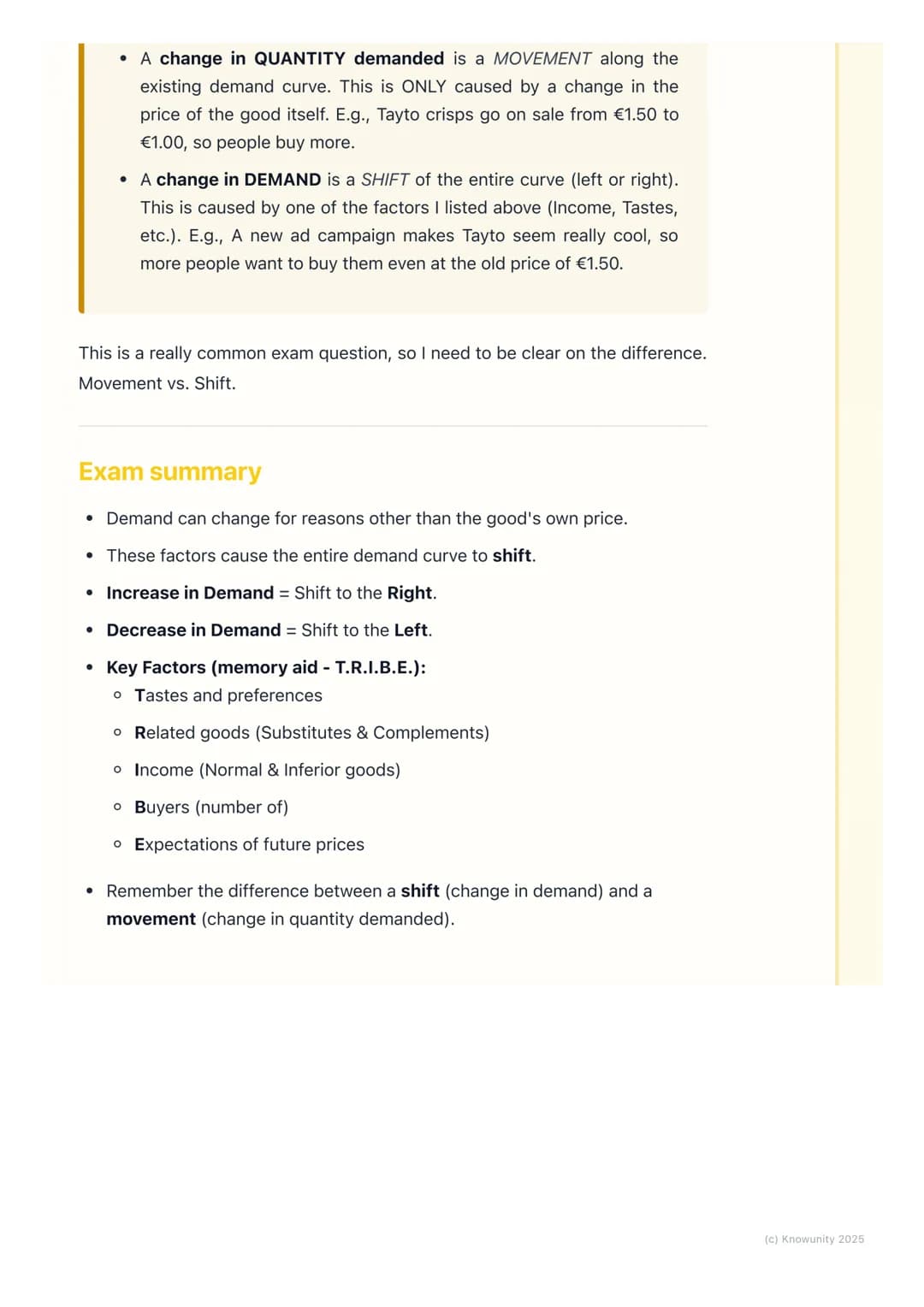
Putting It All Together
Here's your memory aid for exam success: T.R.I.B.E covers the main demand shifters - Tastes, Related goods, Income, Buyers (population), and Expectations of future prices.
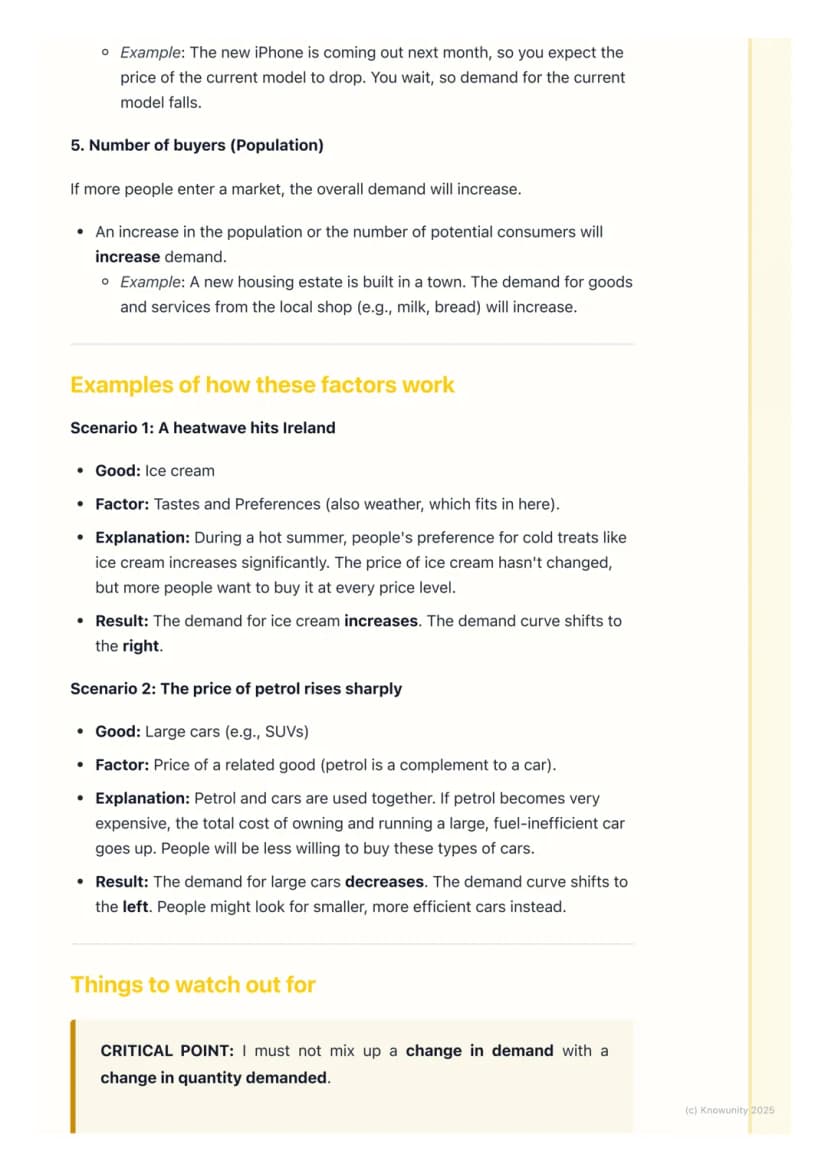
Rightward shifts mean increased demand (more people want the good at every price level). Leftward shifts mean decreased demand (fewer people want it at every price level). The price itself hasn't changed - something else has influenced consumer behaviour.
Master the difference between demand changes and quantity demanded changes. This distinction appears in virtually every economics exam and catches loads of students out.
Exam Success: Practice identifying whether scenarios cause movements along the curve (price changes) or shifts of the entire curve (other factors). This skill will boost your marks significantly.
Si on te demande...
Qu'est-ce que le compagnon IA de Knowunity ?
Notre compagnon IA est spécialement conçu pour répondre aux besoins des étudiants. Sur la base des millions d'éléments de contenu que nous avons sur la plateforme, nous pouvons fournir des réponses vraiment significatives et pertinentes aux étudiants. Mais il ne s'agit pas seulement de réponses, le compagnon a encore plus pour but de guider les élèves dans leurs défis d'apprentissage quotidiens, avec des plans d'étude personnalisés, des quiz ou des éléments de contenu dans le chat et une personnalisation à 100% basée sur les compétences et les développements de l'étudiant.
Où puis-je télécharger l'appli Knowunity ?
Tu peux télécharger l'application dans Google Play Store et dans l'App Store d'Apple.
L'application est-elle vraiment gratuite ?
Oui, tu as un accès entièrement gratuit à tous les contenus de l'appli, tu peux chatter ou suivre les créateurs à tout moment. De plus, nous proposons Knowunity Premium, qui te permet de réviser sans limites!
Rien ne te convient ? Explore d'autres matières.
Les étudiants nous adorent — il ne manque plus que toi.
4.6/5App Store
4.7/5Google Play
L'application est très facile d'utilisation et bien conçue. Jusqu'à présent, j'ai trouvé tout ce que je cherchais et j'ai pu apprendre beaucoup de choses grâce aux présentations ! Je vais certainement utiliser l'application pour un travail en classe ! Et comme source d'inspiration personnelle, elle est bien sûr aussi très utile.
Stefan Sutilisateur iOS
Cette application est vraiment super. Il y a tellement de fiches de révision et d'aide, [...]. Par exemple, la matière qui me pose problème est le français et l'appli a un choix d'aide très large. Grâce à cette application, je me suis améliorée en français. Je la recommanderais à tout le monde.
Samantha Klichutilisatrice Android
Waouh, je suis vraiment abasourdi. J'ai essayé l'application parce que je l'avais déjà vue plusieurs fois dans la publicité et j'ai été absolument choquée. Cette appli est L'AIDE dont on rêve pour l'école et surtout, elle propose tellement de choses, comme des rédactions et des fiches qui m'ont personnellement TRÈS bien aidé.
Annautilisatrice iOS
Economics1 vues·Mis à jour Jun 9, 2026·5 pagesKey Factors Influencing Consumer Demand
Ever wonder why everyone suddenly wants the same trainers, or why nobody buys certain sweets anymore? It's not just about price - loads of other factors can change how much people want to buy something. Understanding these demand shifters is...
1
of 5
Inscris-toi pour voir le contenu. C'est gratuit!
- Accès à tous les documents
- Améliore tes notes
- Rejoins des millions d'étudiants
Understanding Demand Basics
Demand isn't just about price - it's about how willing and able people are to buy something at a given price. Think of it like this: you might want the latest iPhone, but if you can't afford it, there's no actual demand from you.
The Law of Demand tells us that when prices drop, people generally buy more (and vice versa). But here's where it gets interesting - sometimes demand changes even when the price stays exactly the same.
When something other than price affects how much people want to buy, the entire demand curve shifts. This is completely different from just moving along the curve when price changes. Understanding this difference will save you marks in exams!
Key Tip: Remember ceteris paribus - "all other things being equal". Economists use this to study one factor at a time, assuming everything else stays constant.
2
of 5Inscris-toi pour voir le contenu. C'est gratuit!
- Accès à tous les documents
- Améliore tes notes
- Rejoins des millions d'étudiants
Related Goods: Substitutes and Complements
Substitute goods can replace each other - like Coke and Pepsi, or Netflix and Disney+. When Coke's price jumps up, suddenly Pepsi looks more attractive, so demand for Pepsi increases even though its price hasn't changed.
Complementary goods work together - think gaming consoles and games, or cars and petrol. If PlayStation 5 prices soar, fewer people buy the console, which means fewer people need PS5 games. So demand for games drops too.
This is dead useful for understanding real-world scenarios. When petrol prices spike, demand for fuel-efficient cars goes up whilst demand for gas-guzzling SUVs falls.
Quick Check: If two goods are substitutes and one gets more expensive, demand for the other increases. If they're complements and one gets pricier, demand for the other decreases.
3
of 5Inscris-toi pour voir le contenu. C'est gratuit!
- Accès à tous les documents
- Améliore tes notes
- Rejoins des millions d'étudiants
Income Effects: Normal vs Inferior Goods
Your income massively affects what you buy, but not all goods react the same way. Normal goods are things you buy more of when you get richer - branded clothes, restaurant meals, or the latest tech.
Inferior goods work backwards - when your income rises, you actually buy less of them. Think own-brand instant noodles or second-hand clothes. Once you can afford better alternatives, you ditch the cheap stuff.
This explains why Penneys might see less demand during economic booms whilst Brown Thomas sees more. People trade up when they've got extra cash flowing in.
Real Example: Getting a part-time job means you might stop buying supermarket own-brand everything and start choosing branded products instead.
4
of 5Inscris-toi pour voir le contenu. C'est gratuit!
- Accès à tous les documents
- Améliore tes notes
- Rejoins des millions d'étudiants
Tastes, Expectations, and Population Changes
Tastes and preferences drive massive demand shifts. One TikTok trend can make certain trainers explode in popularity overnight. Celebrity endorsements, health scares, or just changing fashions all shift demand curves dramatically.
Future price expectations create interesting behaviour. If you think concert tickets will cost more next week, you'll buy them now - increasing current demand. But if you expect phone prices to drop when the new model launches, you'll wait.
Population changes are straightforward but powerful. More people in an area means higher demand for local services. New housing estates boost demand for everything from groceries to hairdressers.
Exam Alert: Don't confuse a movement along the demand curve (price change only) with a shift of the entire curve (caused by these factors).
5
of 5Inscris-toi pour voir le contenu. C'est gratuit!
- Accès à tous les documents
- Améliore tes notes
- Rejoins des millions d'étudiants
Putting It All Together
Here's your memory aid for exam success: T.R.I.B.E covers the main demand shifters - Tastes, Related goods, Income, Buyers (population), and Expectations of future prices.
Rightward shifts mean increased demand (more people want the good at every price level). Leftward shifts mean decreased demand (fewer people want it at every price level). The price itself hasn't changed - something else has influenced consumer behaviour.
Master the difference between demand changes and quantity demanded changes. This distinction appears in virtually every economics exam and catches loads of students out.
Exam Success: Practice identifying whether scenarios cause movements along the curve (price changes) or shifts of the entire curve (other factors). This skill will boost your marks significantly.
Si on te demande...
Qu'est-ce que le compagnon IA de Knowunity ?
Notre compagnon IA est spécialement conçu pour répondre aux besoins des étudiants. Sur la base des millions d'éléments de contenu que nous avons sur la plateforme, nous pouvons fournir des réponses vraiment significatives et pertinentes aux étudiants. Mais il ne s'agit pas seulement de réponses, le compagnon a encore plus pour but de guider les élèves dans leurs défis d'apprentissage quotidiens, avec des plans d'étude personnalisés, des quiz ou des éléments de contenu dans le chat et une personnalisation à 100% basée sur les compétences et les développements de l'étudiant.
Où puis-je télécharger l'appli Knowunity ?
Tu peux télécharger l'application dans Google Play Store et dans l'App Store d'Apple.
L'application est-elle vraiment gratuite ?
Oui, tu as un accès entièrement gratuit à tous les contenus de l'appli, tu peux chatter ou suivre les créateurs à tout moment. De plus, nous proposons Knowunity Premium, qui te permet de réviser sans limites!
Rien ne te convient ? Explore d'autres matières.
Les étudiants nous adorent — il ne manque plus que toi.
4.6/5App Store
4.7/5Google Play
L'application est très facile d'utilisation et bien conçue. Jusqu'à présent, j'ai trouvé tout ce que je cherchais et j'ai pu apprendre beaucoup de choses grâce aux présentations ! Je vais certainement utiliser l'application pour un travail en classe ! Et comme source d'inspiration personnelle, elle est bien sûr aussi très utile.
Stefan Sutilisateur iOS
Cette application est vraiment super. Il y a tellement de fiches de révision et d'aide, [...]. Par exemple, la matière qui me pose problème est le français et l'appli a un choix d'aide très large. Grâce à cette application, je me suis améliorée en français. Je la recommanderais à tout le monde.
Samantha Klichutilisatrice Android
Waouh, je suis vraiment abasourdi. J'ai essayé l'application parce que je l'avais déjà vue plusieurs fois dans la publicité et j'ai été absolument choquée. Cette appli est L'AIDE dont on rêve pour l'école et surtout, elle propose tellement de choses, comme des rédactions et des fiches qui m'ont personnellement TRÈS bien aidé.
Annautilisatrice iOS