
Wenn du eine Englisch-Klausur schreibst und dabei Texte analysieren oder... Affiche plus
 Englisch3,595 vues·Mis à jour May 26, 2026·6 pages
Top-Phrasen für das Englisch-Abitur
1 / 6
1
of 6
Nützliche Phrasen für den Einstieg
Der erste Eindruck zählt - und das gilt besonders für deine Einleitung in Englisch-Klausuren! Mit den richtigen Standardphrasen wirkst du sofort professioneller.
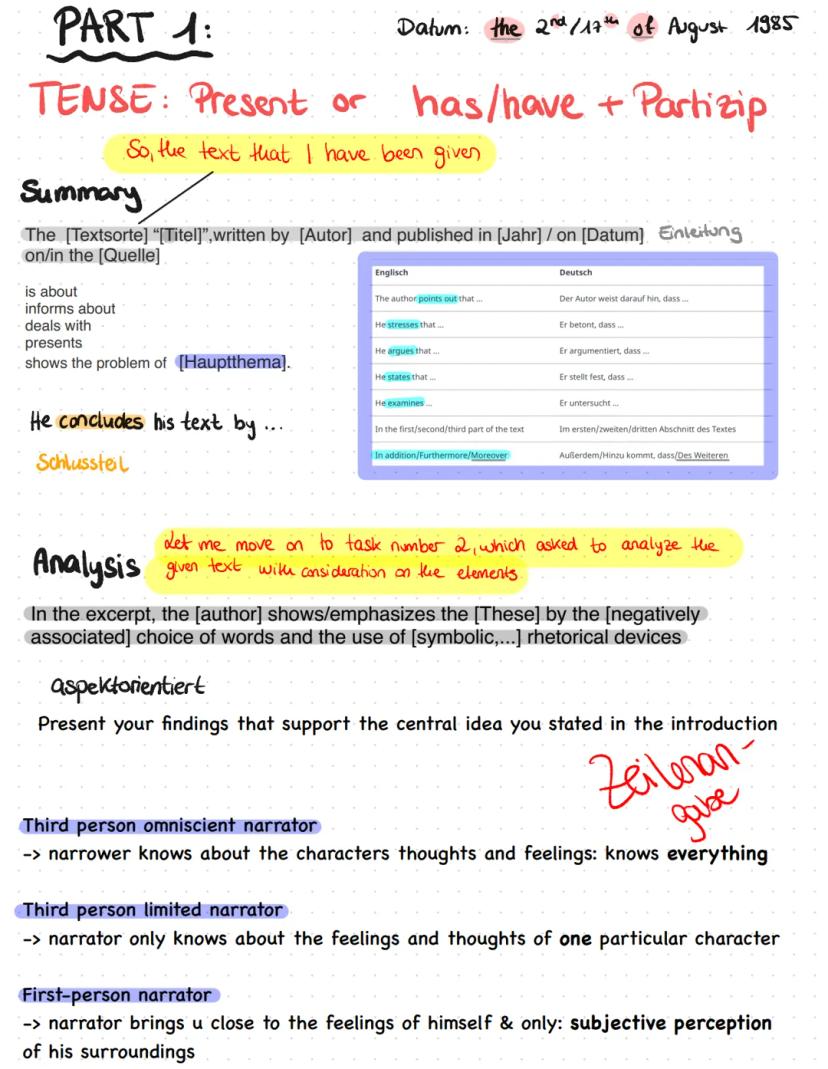
Für die Texteinleitung merkst du dir am besten diese Formel: "The [Textsorte] '[Titel]', written by [Autor] and published in [Jahr]/on [Datum] on/in the [Quelle]". Beim Datum verwendest du übrigens "the 2nd/17th of August 1985" und achtest darauf, dass du im Present Tense oder mit "has/have + Partizip" schreibst.
Tipp: Lerne diese Einleitungsformel auswendig - sie funktioniert bei fast jedem Text und spart dir wertvolle Zeit in der Klausur!
2
of 6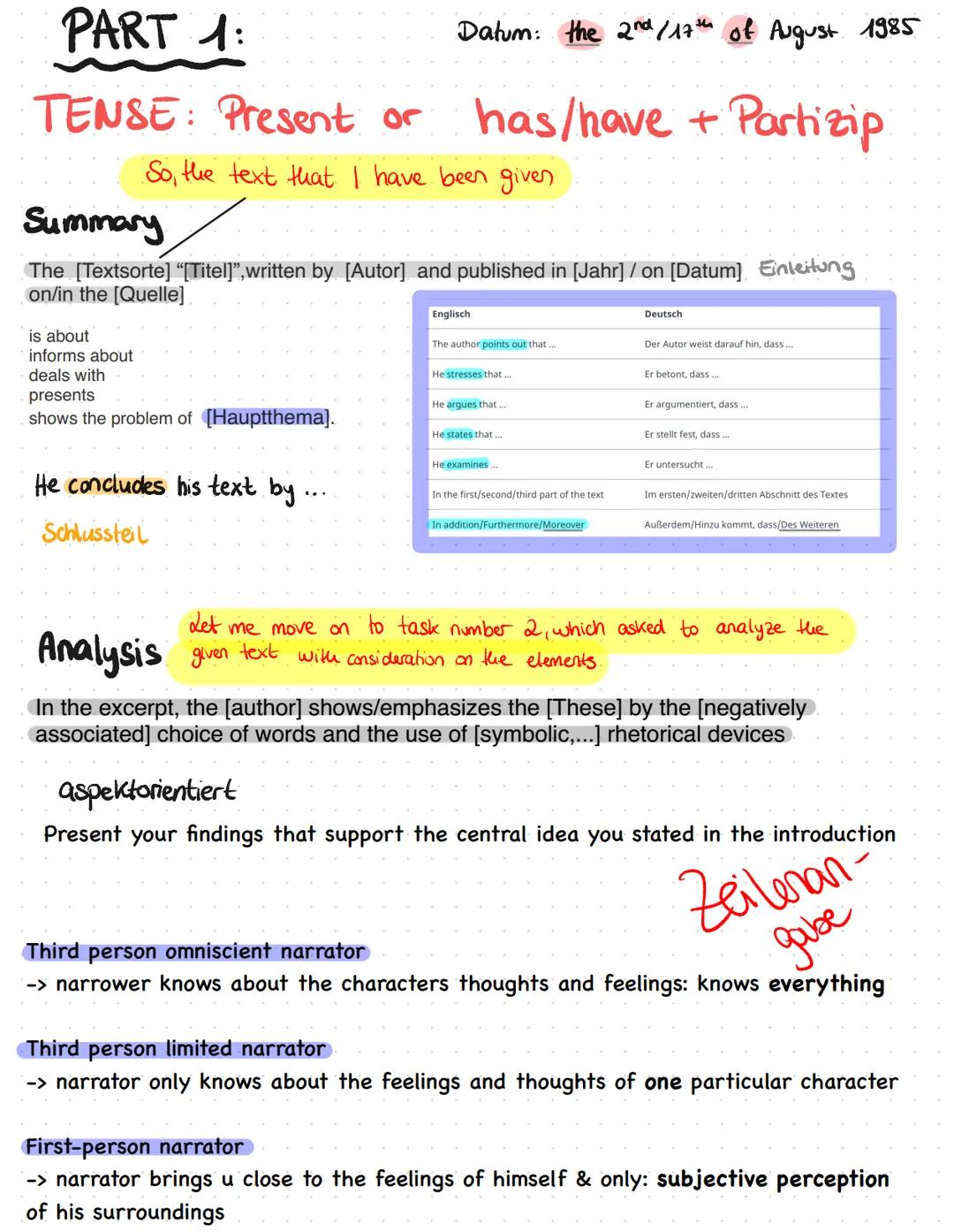
Analysephrasen und Erzählperspektiven
Für eine gute Textanalyse brauchst du Phrasen, die zeigen, was der Autor macht. "The author points out that..." (Der Autor weist darauf hin), "He stresses that..." (Er betont) oder "He argues that..." (Er argumentiert) sind deine Grundausstattung.
Bei der Erzählperspektive unterscheidest du drei wichtige Typen: Der Third person omniscient narrator weiß alles über alle Charaktere. Der Third person limited narrator kennt nur die Gedanken einer Person. Der First-person narrator erzählt subjektiv aus seiner eigenen Sicht.
Vergiss nicht die aspektorientierte Analyse: "In the excerpt, the author shows the [These] by the negatively associated choice of words and the use of rhetorical devices." So verbindest du Textinhalt mit sprachlichen Mitteln.
Merkhilfe: Omniscient = allwissend, Limited = begrenzt, First-person = ich-bezogen!
3
of 6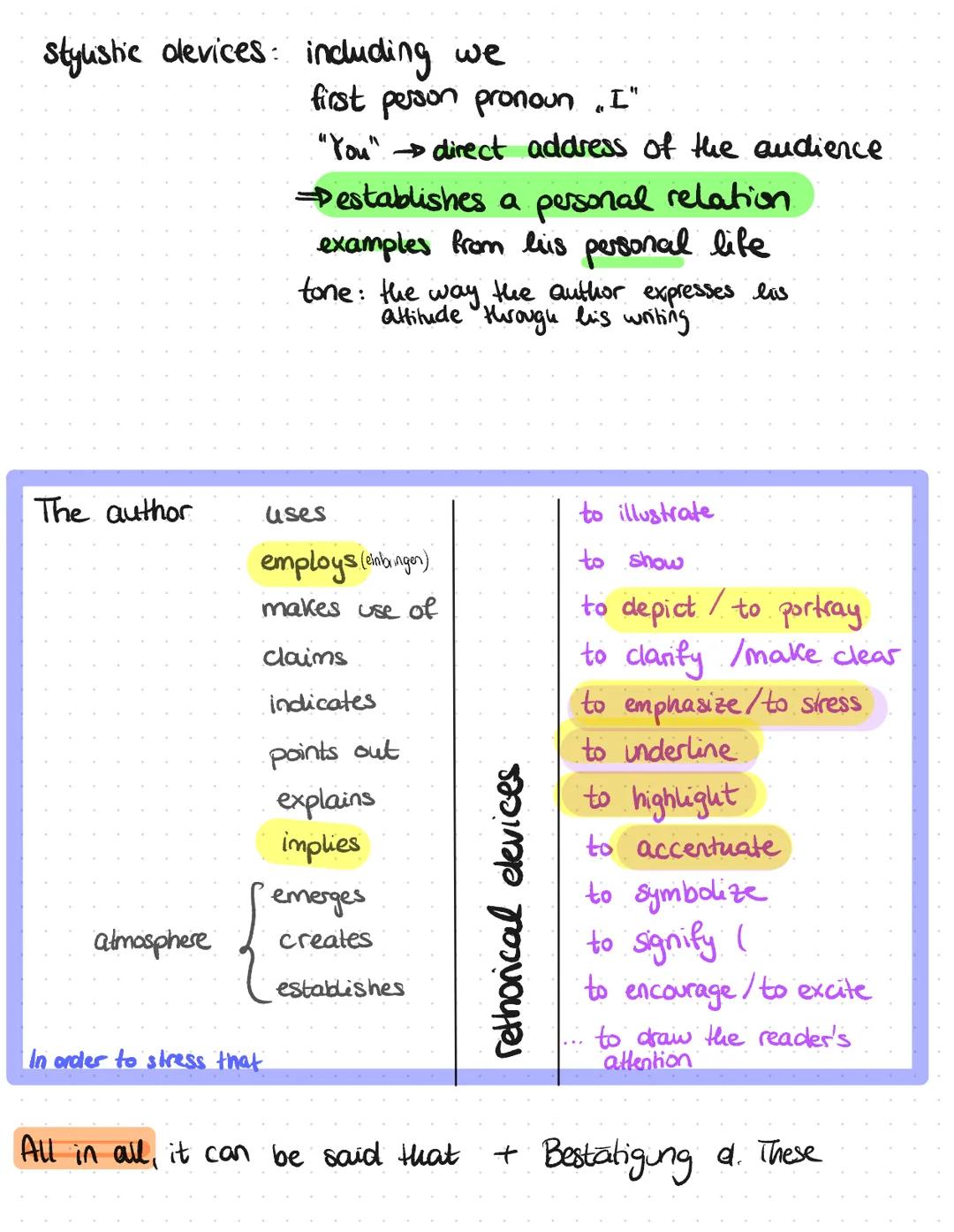
Stilmittel und Wirkung beschreiben
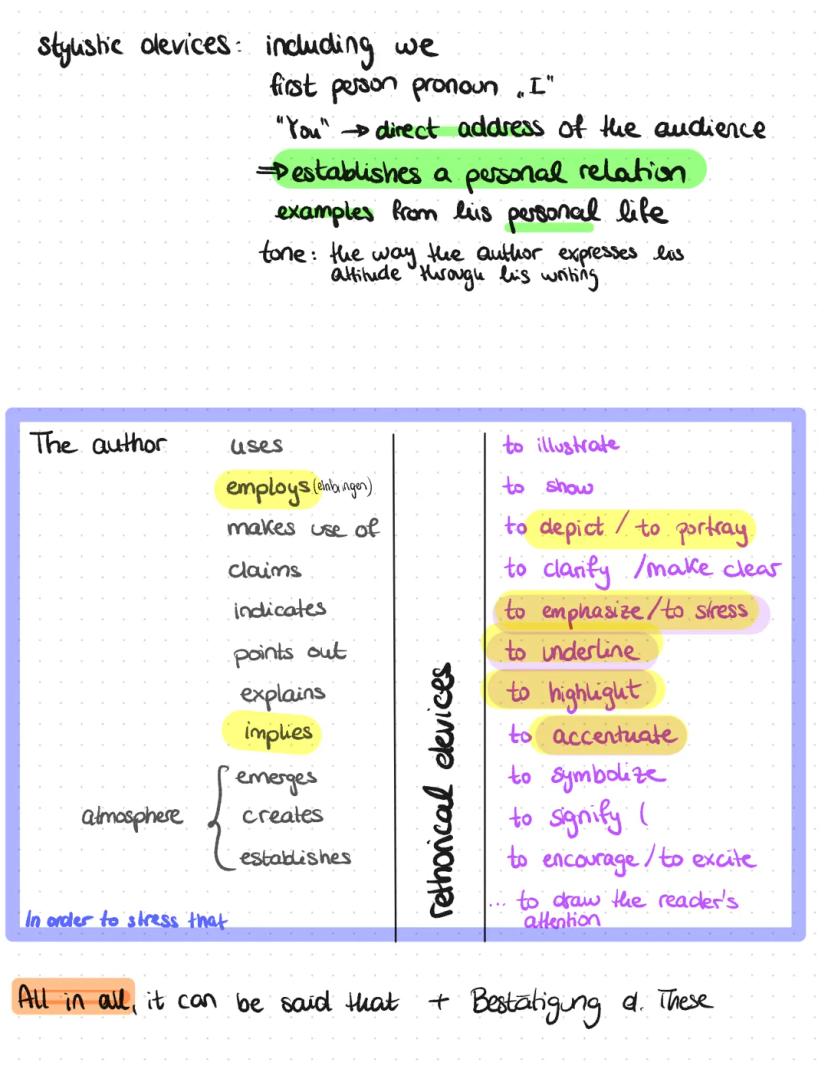
Stilmittel erkennen ist nur die halbe Miete - du musst auch ihre Wirkung erklären können! Der Autor "uses", "employs" oder "makes use of" verschiedene Techniken, um bestimmte Effekte zu erzielen.
Wichtige Wirkungsverben sind: "to emphasize/to stress" (betonen), "to highlight" (hervorheben), "to symbolize" (symbolisieren) und "to draw the reader's attention" (Aufmerksamkeit lenken). Diese Verben zeigen, warum der Autor bestimmte Mittel einsetzt.
Persönliche Elemente wie "I", "you" oder "we" schaffen eine direkte Verbindung zum Leser. Der Tone (Tonfall) verrät die Haltung des Autors zum Thema.
Profi-Tipp: Verknüpfe Stilmittel immer mit ihrer Wirkung - nie nur auflisten!
4
of 6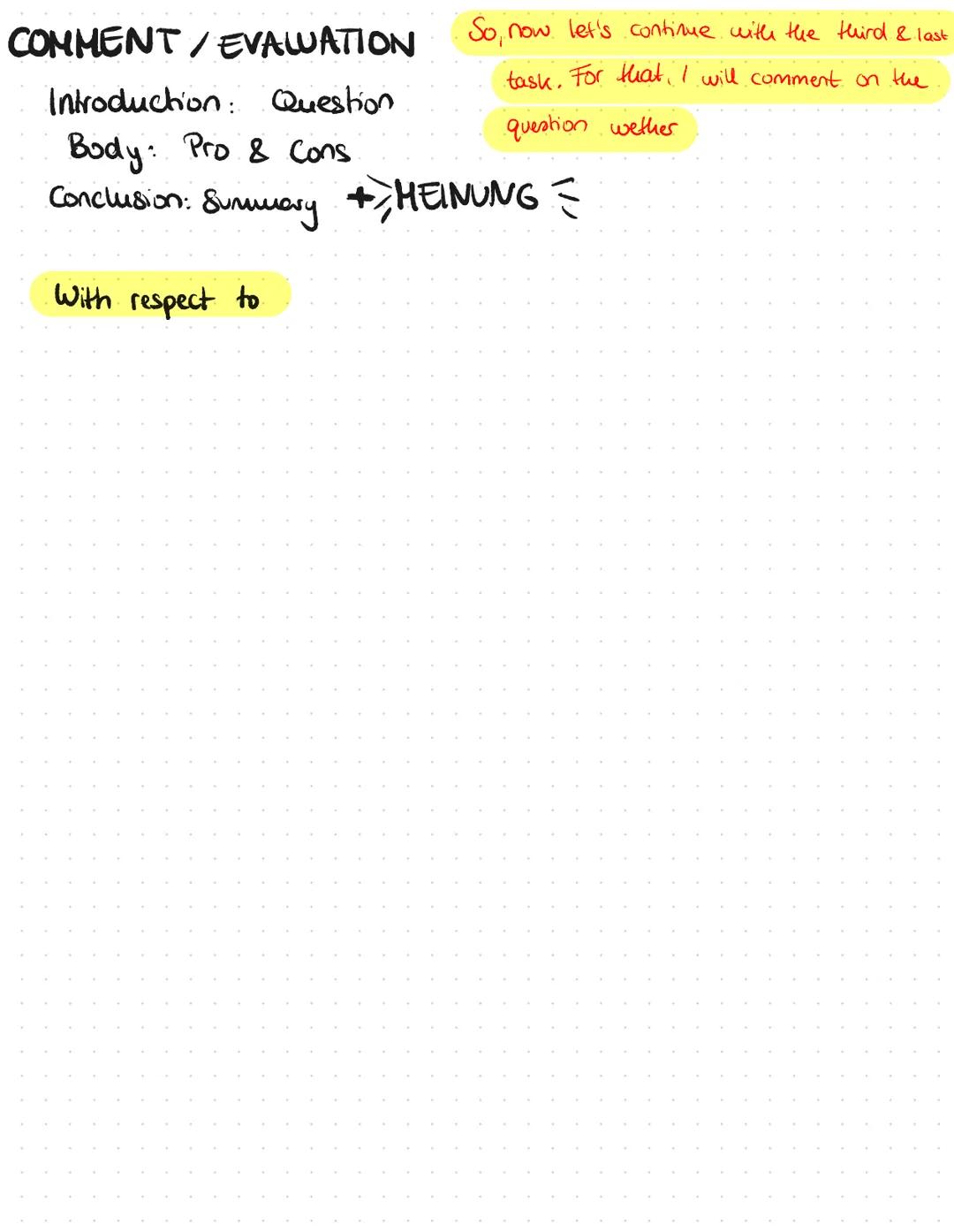
Comment und Evaluation strukturieren
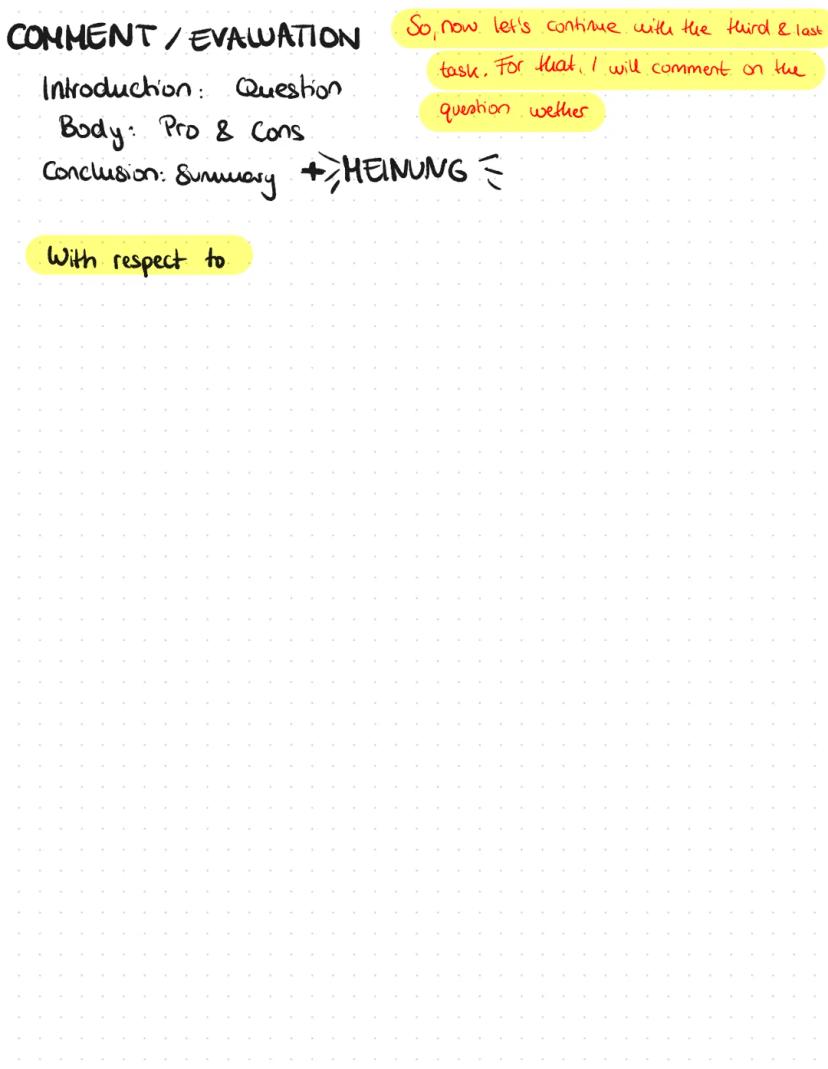
Beim Comment zeigst du deine eigene Meinung zu einer Frage. Die Struktur ist klar: Introduction mit der Fragestellung, Body mit Pro- und Contra-Argumenten, Conclusion mit deiner persönlichen Meinung.
"With respect to" (In Bezug auf) ist ein eleganter Einstieg für deine Stellungnahme. Du bewertest dabei nicht nur den Text, sondern entwickelst eine eigene argumentative Position.
Der Schlüssel liegt darin, beide Seiten zu beleuchten, bevor du dich festlegst. So wirkst du reflektiert und durchdacht.
Wichtig: Deine Meinung gehört in den Schluss - vorher bleibst du neutral und wägst ab!
5
of 6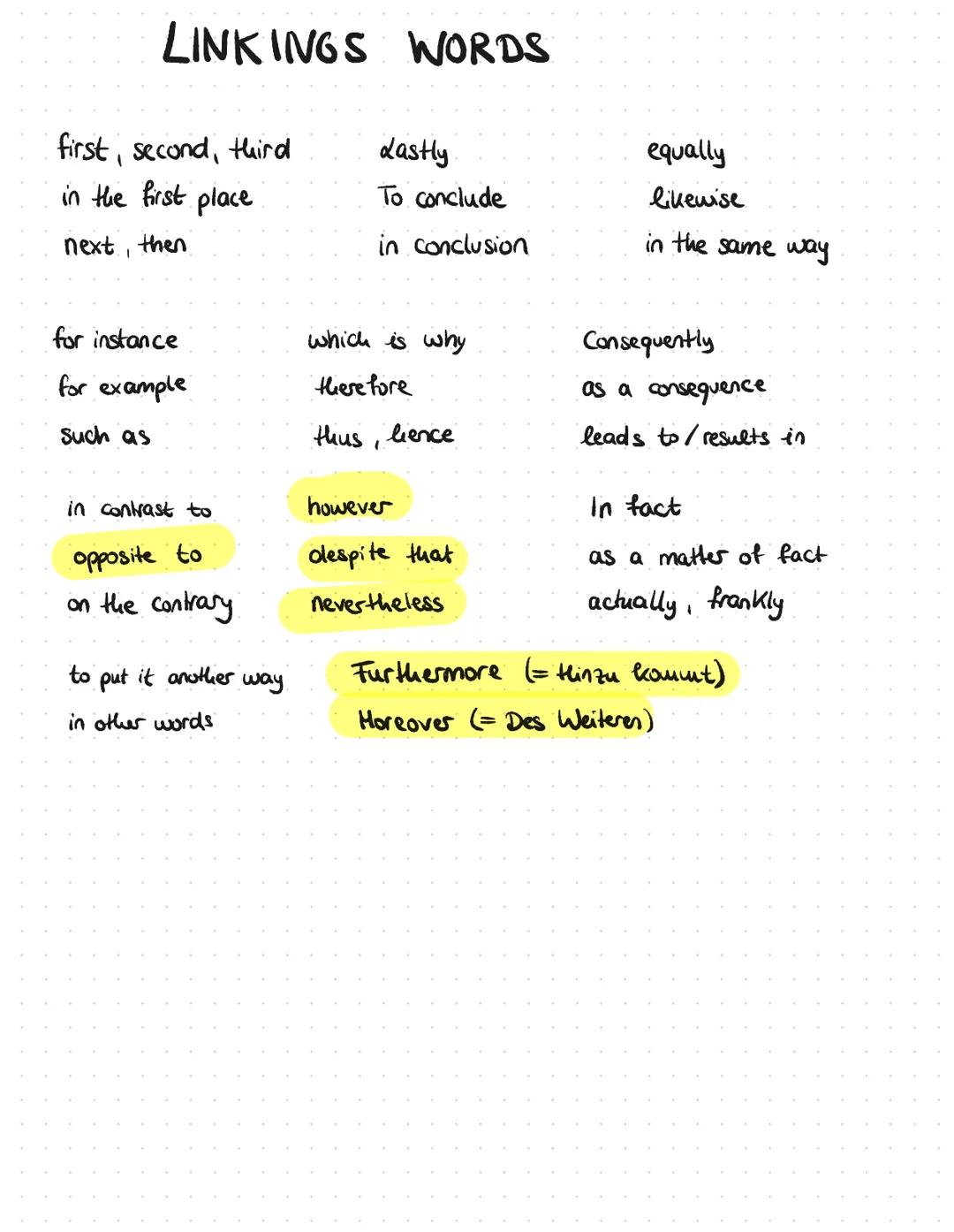
Linking Words für bessere Struktur
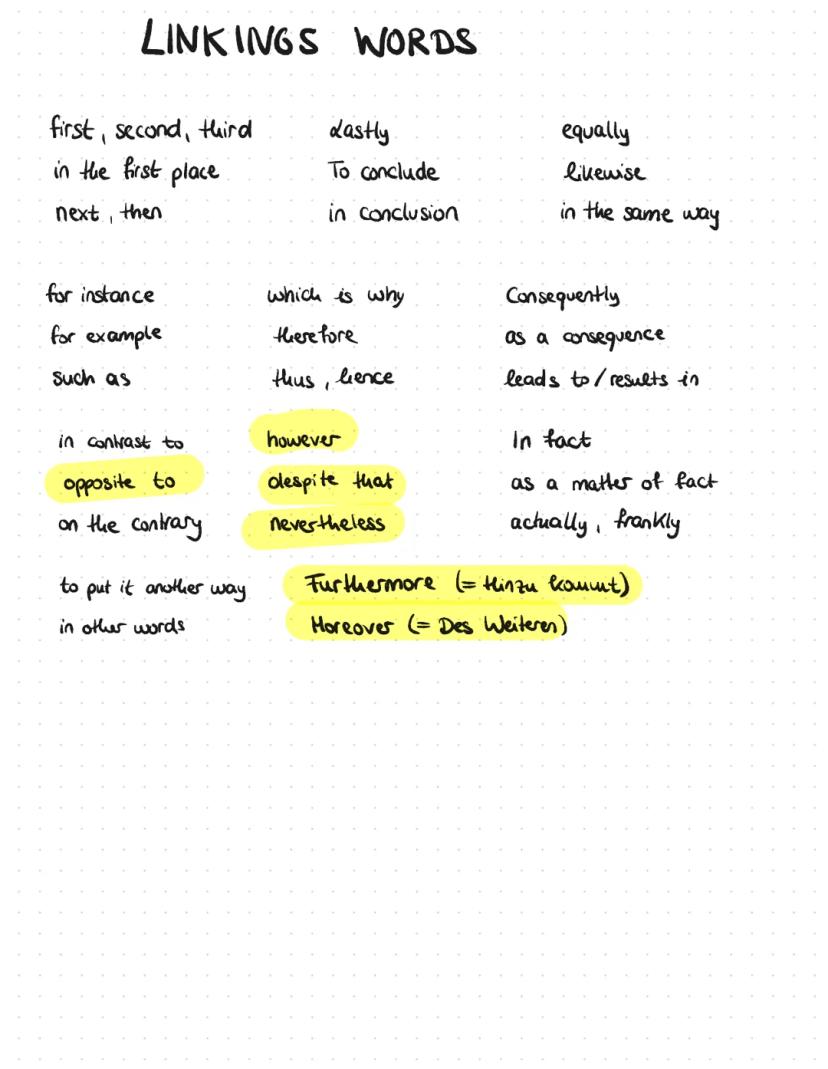
Linking Words sind das Geheimnis für flüssige Texte! Sie verbinden deine Gedanken logisch und machen deine Argumentation nachvollziehbar.
Für Aufzählungen verwendest du "first, second, third" oder "in the first place, next, then". Beispiele leitest du mit "for instance" oder "such as" ein. Gegensätze zeigst du mit "in contrast to", "however" oder "nevertheless".
Schlussfolgerungen markierst du mit "therefore", "thus" oder "consequently". Für Zusatzinformationen nutzt du "furthermore" oder "moreover". Am Ende fasst du mit "to conclude" oder "in conclusion" zusammen.
Übung macht den Meister: Verwende in jedem Absatz mindestens ein Linking Word!
6
of 6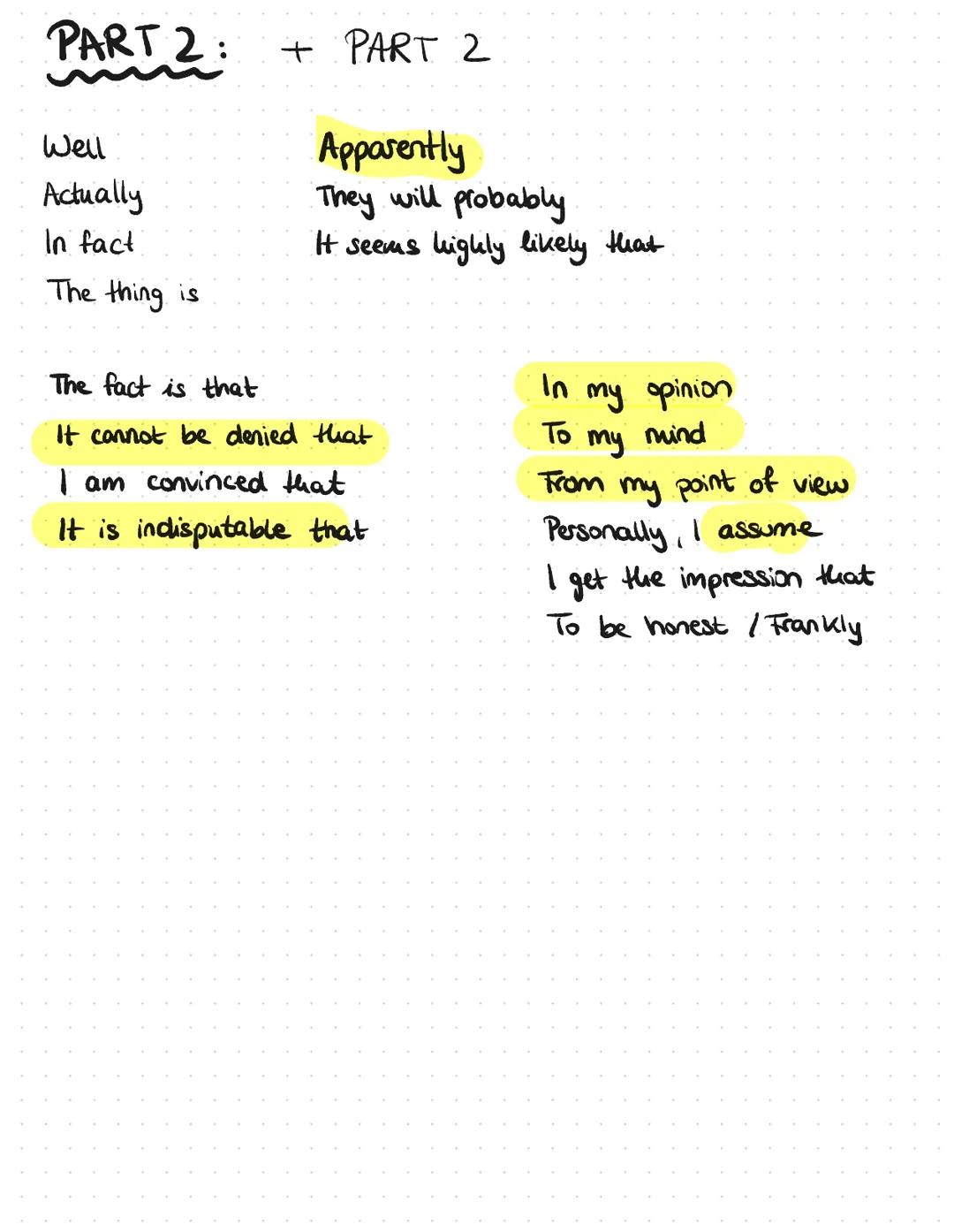
Meinungsäußerung und Wahrscheinlichkeit
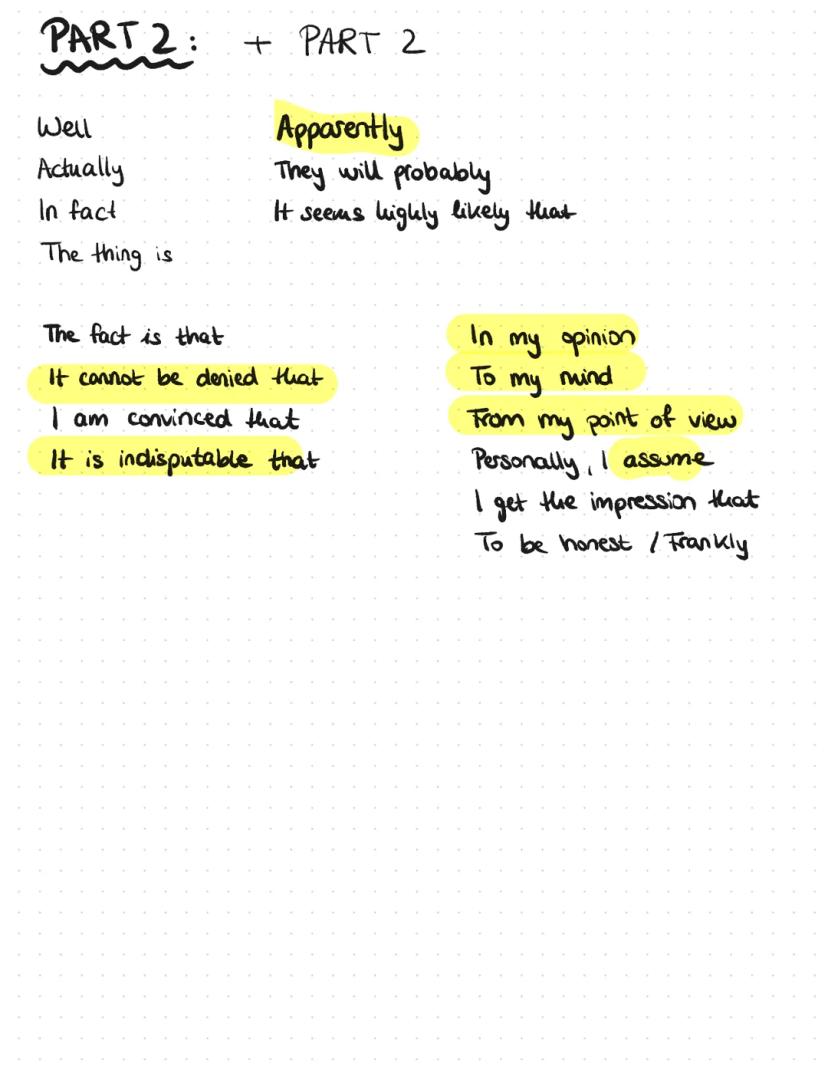
Deine persönliche Meinung drückst du höflich aber bestimmt aus. "In my opinion", "from my point of view" oder "personally, I assume" zeigen, dass du eine durchdachte Position hast.
Für Wahrscheinlichkeiten und Vermutungen verwendest du "apparently", "it seems highly likely that" oder "they will probably". So wirkst du nicht zu absolut in deinen Aussagen.
Bekräftigungen wie "I am convinced that", "it cannot be denied that" oder "it is indisputable that" unterstützen starke Argumente. "To be honest" oder "frankly" verleihen deinen Aussagen Authentizität.
Balance finden: Sei selbstbewusst in deiner Meinung, aber respektiere andere Sichtweisen!
Si on te demande...
Qu'est-ce que le compagnon IA de Knowunity ?
Notre compagnon IA est spécialement conçu pour répondre aux besoins des étudiants. Sur la base des millions d'éléments de contenu que nous avons sur la plateforme, nous pouvons fournir des réponses vraiment significatives et pertinentes aux étudiants. Mais il ne s'agit pas seulement de réponses, le compagnon a encore plus pour but de guider les élèves dans leurs défis d'apprentissage quotidiens, avec des plans d'étude personnalisés, des quiz ou des éléments de contenu dans le chat et une personnalisation à 100% basée sur les compétences et les développements de l'étudiant.
Où puis-je télécharger l'appli Knowunity ?
Tu peux télécharger l'application dans Google Play Store et dans l'App Store d'Apple.
L'application est-elle vraiment gratuite ?
Oui, tu as un accès entièrement gratuit à tous les contenus de l'appli, tu peux chatter ou suivre les créateurs à tout moment. De plus, nous proposons Knowunity Premium, qui te permet de réviser sans limites!
Contenus similaires
Contenus les plus populaires : linking words
9Contenus les plus populaires en Englisch
9Contenus les plus populaires
9Rien ne te convient ? Explore d'autres matières.
Les étudiants nous adorent — il ne manque plus que toi.
4.6/5App Store
4.7/5Google Play
L'application est très facile d'utilisation et bien conçue. Jusqu'à présent, j'ai trouvé tout ce que je cherchais et j'ai pu apprendre beaucoup de choses grâce aux présentations ! Je vais certainement utiliser l'application pour un travail en classe ! Et comme source d'inspiration personnelle, elle est bien sûr aussi très utile.
Stefan Sutilisateur iOS
Cette application est vraiment super. Il y a tellement de fiches de révision et d'aide, [...]. Par exemple, la matière qui me pose problème est le français et l'appli a un choix d'aide très large. Grâce à cette application, je me suis améliorée en français. Je la recommanderais à tout le monde.
Samantha Klichutilisatrice Android
Waouh, je suis vraiment abasourdi. J'ai essayé l'application parce que je l'avais déjà vue plusieurs fois dans la publicité et j'ai été absolument choquée. Cette appli est L'AIDE dont on rêve pour l'école et surtout, elle propose tellement de choses, comme des rédactions et des fiches qui m'ont personnellement TRÈS bien aidé.
Annautilisatrice iOS
Englisch3,595 vues·Mis à jour May 26, 2026·6 pagesTop-Phrasen für das Englisch-Abitur
Wenn du eine Englisch-Klausur schreibst und dabei Texte analysieren oder kommentieren musst, brauchst du die richtigen sprachlichen Werkzeuge. Diese nützlichen Phrasen und Linking Words helfen dir dabei, deine Gedanken strukturiert und überzeugend zu formulieren.
1
of 6Inscris-toi pour voir le contenu. C'est gratuit!
- Accès à tous les documents
- Améliore tes notes
- Rejoins des millions d'étudiants
Nützliche Phrasen für den Einstieg
Der erste Eindruck zählt - und das gilt besonders für deine Einleitung in Englisch-Klausuren! Mit den richtigen Standardphrasen wirkst du sofort professioneller.
Für die Texteinleitung merkst du dir am besten diese Formel: "The [Textsorte] '[Titel]', written by [Autor] and published in [Jahr]/on [Datum] on/in the [Quelle]". Beim Datum verwendest du übrigens "the 2nd/17th of August 1985" und achtest darauf, dass du im Present Tense oder mit "has/have + Partizip" schreibst.
Tipp: Lerne diese Einleitungsformel auswendig - sie funktioniert bei fast jedem Text und spart dir wertvolle Zeit in der Klausur!
2
of 6Inscris-toi pour voir le contenu. C'est gratuit!
- Accès à tous les documents
- Améliore tes notes
- Rejoins des millions d'étudiants
Analysephrasen und Erzählperspektiven
Für eine gute Textanalyse brauchst du Phrasen, die zeigen, was der Autor macht. "The author points out that..." (Der Autor weist darauf hin), "He stresses that..." (Er betont) oder "He argues that..." (Er argumentiert) sind deine Grundausstattung.
Bei der Erzählperspektive unterscheidest du drei wichtige Typen: Der Third person omniscient narrator weiß alles über alle Charaktere. Der Third person limited narrator kennt nur die Gedanken einer Person. Der First-person narrator erzählt subjektiv aus seiner eigenen Sicht.
Vergiss nicht die aspektorientierte Analyse: "In the excerpt, the author shows the [These] by the negatively associated choice of words and the use of rhetorical devices." So verbindest du Textinhalt mit sprachlichen Mitteln.
Merkhilfe: Omniscient = allwissend, Limited = begrenzt, First-person = ich-bezogen!
3
of 6Inscris-toi pour voir le contenu. C'est gratuit!
- Accès à tous les documents
- Améliore tes notes
- Rejoins des millions d'étudiants
Stilmittel und Wirkung beschreiben
Stilmittel erkennen ist nur die halbe Miete - du musst auch ihre Wirkung erklären können! Der Autor "uses", "employs" oder "makes use of" verschiedene Techniken, um bestimmte Effekte zu erzielen.
Wichtige Wirkungsverben sind: "to emphasize/to stress" (betonen), "to highlight" (hervorheben), "to symbolize" (symbolisieren) und "to draw the reader's attention" (Aufmerksamkeit lenken). Diese Verben zeigen, warum der Autor bestimmte Mittel einsetzt.
Persönliche Elemente wie "I", "you" oder "we" schaffen eine direkte Verbindung zum Leser. Der Tone (Tonfall) verrät die Haltung des Autors zum Thema.
Profi-Tipp: Verknüpfe Stilmittel immer mit ihrer Wirkung - nie nur auflisten!
4
of 6Inscris-toi pour voir le contenu. C'est gratuit!
- Accès à tous les documents
- Améliore tes notes
- Rejoins des millions d'étudiants
Comment und Evaluation strukturieren
Beim Comment zeigst du deine eigene Meinung zu einer Frage. Die Struktur ist klar: Introduction mit der Fragestellung, Body mit Pro- und Contra-Argumenten, Conclusion mit deiner persönlichen Meinung.
"With respect to" (In Bezug auf) ist ein eleganter Einstieg für deine Stellungnahme. Du bewertest dabei nicht nur den Text, sondern entwickelst eine eigene argumentative Position.
Der Schlüssel liegt darin, beide Seiten zu beleuchten, bevor du dich festlegst. So wirkst du reflektiert und durchdacht.
Wichtig: Deine Meinung gehört in den Schluss - vorher bleibst du neutral und wägst ab!
5
of 6Inscris-toi pour voir le contenu. C'est gratuit!
- Accès à tous les documents
- Améliore tes notes
- Rejoins des millions d'étudiants
Linking Words für bessere Struktur
Linking Words sind das Geheimnis für flüssige Texte! Sie verbinden deine Gedanken logisch und machen deine Argumentation nachvollziehbar.
Für Aufzählungen verwendest du "first, second, third" oder "in the first place, next, then". Beispiele leitest du mit "for instance" oder "such as" ein. Gegensätze zeigst du mit "in contrast to", "however" oder "nevertheless".
Schlussfolgerungen markierst du mit "therefore", "thus" oder "consequently". Für Zusatzinformationen nutzt du "furthermore" oder "moreover". Am Ende fasst du mit "to conclude" oder "in conclusion" zusammen.
Übung macht den Meister: Verwende in jedem Absatz mindestens ein Linking Word!
6
of 6Inscris-toi pour voir le contenu. C'est gratuit!
- Accès à tous les documents
- Améliore tes notes
- Rejoins des millions d'étudiants
Meinungsäußerung und Wahrscheinlichkeit
Deine persönliche Meinung drückst du höflich aber bestimmt aus. "In my opinion", "from my point of view" oder "personally, I assume" zeigen, dass du eine durchdachte Position hast.
Für Wahrscheinlichkeiten und Vermutungen verwendest du "apparently", "it seems highly likely that" oder "they will probably". So wirkst du nicht zu absolut in deinen Aussagen.
Bekräftigungen wie "I am convinced that", "it cannot be denied that" oder "it is indisputable that" unterstützen starke Argumente. "To be honest" oder "frankly" verleihen deinen Aussagen Authentizität.
Balance finden: Sei selbstbewusst in deiner Meinung, aber respektiere andere Sichtweisen!
Si on te demande...
Qu'est-ce que le compagnon IA de Knowunity ?
Notre compagnon IA est spécialement conçu pour répondre aux besoins des étudiants. Sur la base des millions d'éléments de contenu que nous avons sur la plateforme, nous pouvons fournir des réponses vraiment significatives et pertinentes aux étudiants. Mais il ne s'agit pas seulement de réponses, le compagnon a encore plus pour but de guider les élèves dans leurs défis d'apprentissage quotidiens, avec des plans d'étude personnalisés, des quiz ou des éléments de contenu dans le chat et une personnalisation à 100% basée sur les compétences et les développements de l'étudiant.
Où puis-je télécharger l'appli Knowunity ?
Tu peux télécharger l'application dans Google Play Store et dans l'App Store d'Apple.
L'application est-elle vraiment gratuite ?
Oui, tu as un accès entièrement gratuit à tous les contenus de l'appli, tu peux chatter ou suivre les créateurs à tout moment. De plus, nous proposons Knowunity Premium, qui te permet de réviser sans limites!
Contenus similaires
Contenus les plus populaires : linking words
9Contenus les plus populaires en Englisch
9Contenus les plus populaires
9Rien ne te convient ? Explore d'autres matières.
Les étudiants nous adorent — il ne manque plus que toi.
4.6/5App Store
4.7/5Google Play
L'application est très facile d'utilisation et bien conçue. Jusqu'à présent, j'ai trouvé tout ce que je cherchais et j'ai pu apprendre beaucoup de choses grâce aux présentations ! Je vais certainement utiliser l'application pour un travail en classe ! Et comme source d'inspiration personnelle, elle est bien sûr aussi très utile.
Stefan Sutilisateur iOS
Cette application est vraiment super. Il y a tellement de fiches de révision et d'aide, [...]. Par exemple, la matière qui me pose problème est le français et l'appli a un choix d'aide très large. Grâce à cette application, je me suis améliorée en français. Je la recommanderais à tout le monde.
Samantha Klichutilisatrice Android
Waouh, je suis vraiment abasourdi. J'ai essayé l'application parce que je l'avais déjà vue plusieurs fois dans la publicité et j'ai été absolument choquée. Cette appli est L'AIDE dont on rêve pour l'école et surtout, elle propose tellement de choses, comme des rédactions et des fiches qui m'ont personnellement TRÈS bien aidé.
Annautilisatrice iOS