
Ever wondered why your fridge door stays shut or how... Affiche plus
 Physics1 vues·Mis à jour May 31, 2026·7 pages
Understanding Magnets and Magnetic Fields
1 / 7
1
of 7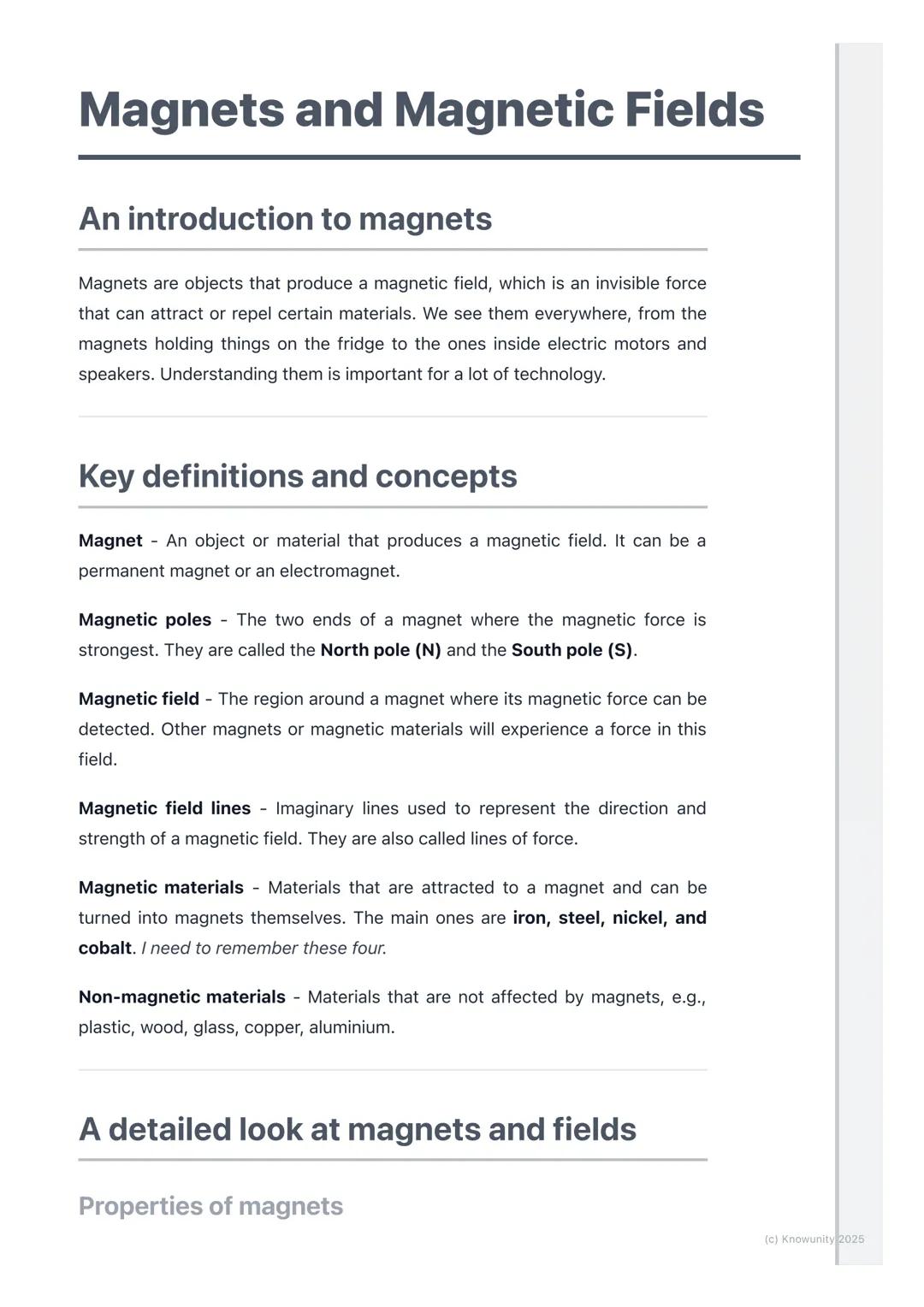
What Are Magnets and Magnetic Fields?
You're surrounded by magnets every day, from your phone's speakers to the motor in your washing machine. Magnets are objects that create an invisible force field around them, and this magnetic field can attract certain materials or push other magnets away.
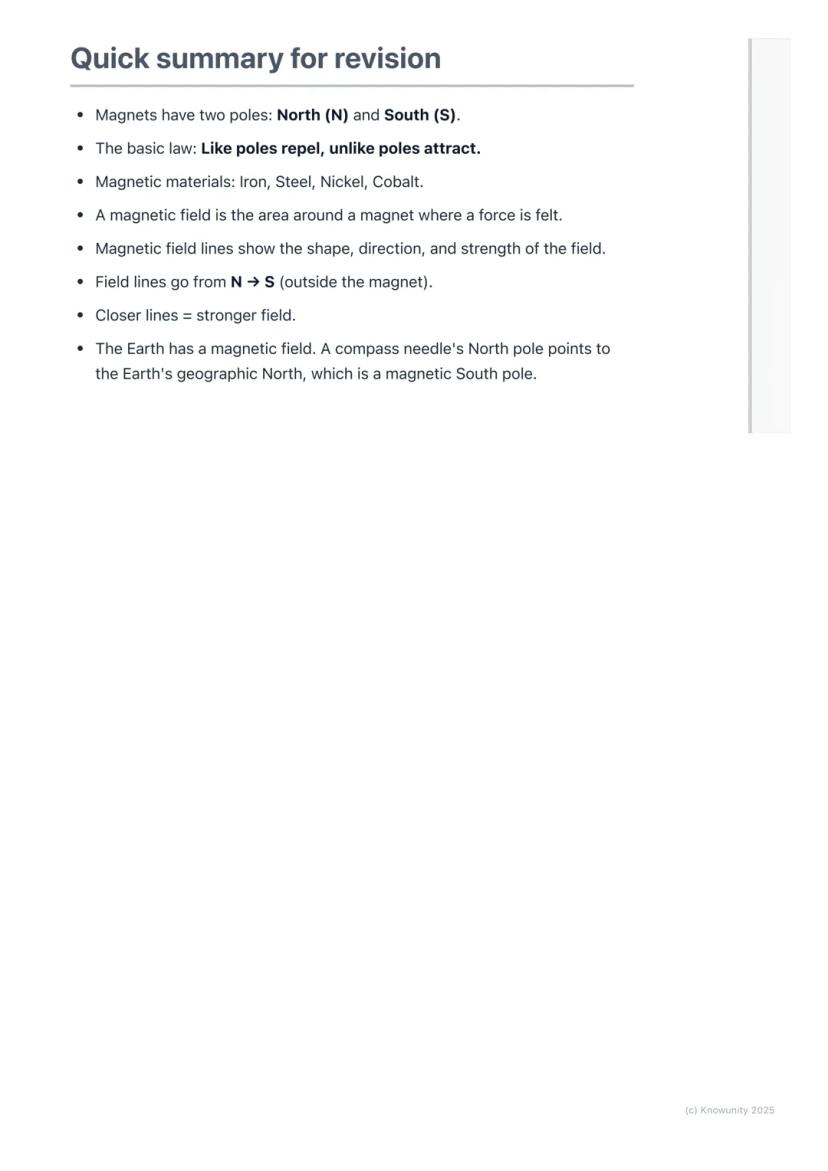
The really important stuff to remember: magnets have two magnetic poles - a North pole (N) and a South pole (S) - where the magnetic force is strongest. Only four materials are naturally magnetic materials: iron, steel, nickel, and cobalt. Everything else like plastic, wood, or copper? Completely unaffected by magnets.
Magnetic field lines are how we draw the invisible field to see what's happening. Think of them as the paths that show where the magnetic force is acting and how strong it is.
Quick tip: Steel is just iron mixed with other elements, which is why it's magnetic too - perfect for making strong permanent magnets!
2
of 7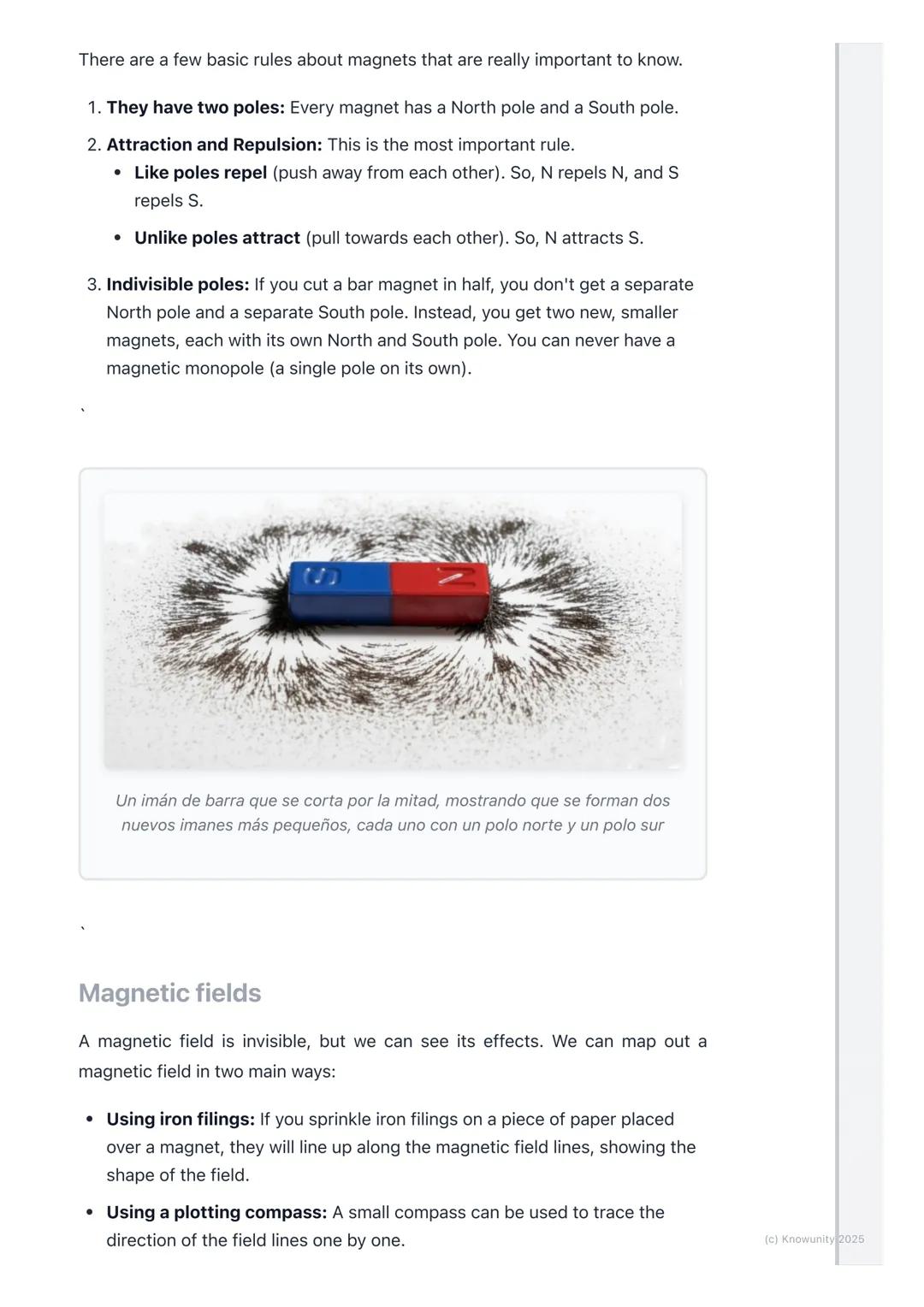
The Golden Rules of Magnetism
Here's where magnetism gets predictable, and these rules will save you in every exam. Like poles repel (N pushes away N, S pushes away S) and unlike poles attract (N pulls towards S). It's that simple, but it explains everything magnets do.
Here's something that might blow your mind: if you snap a bar magnet in half, you don't get separate N and S pieces. Instead, you get two complete magnets, each with their own North and South poles. You can never isolate a single pole on its own.
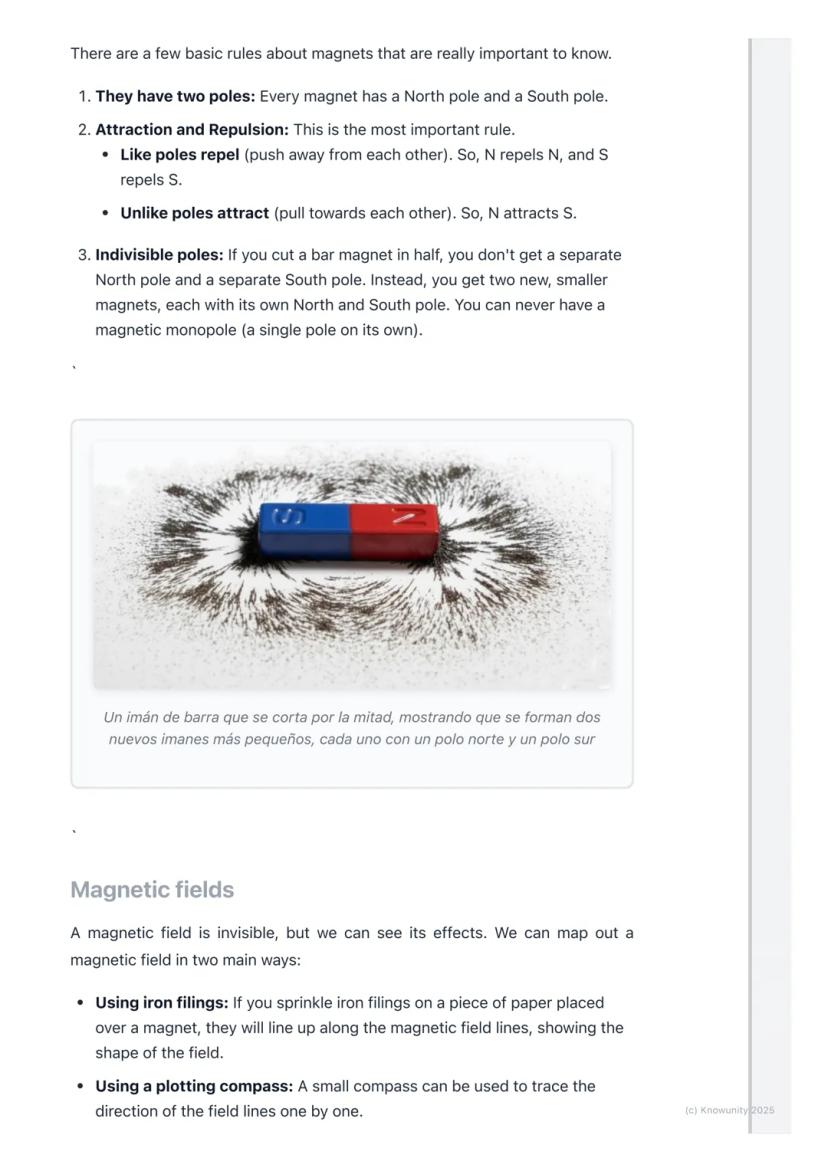
We can actually see magnetic fields by sprinkling iron filings around a magnet - they line up along the invisible field lines like magic. Alternatively, you can use a small compass to trace the field lines one by one.
Remember this: The closer together the field lines are drawn, the stronger the magnetic force is in that spot!
3
of 7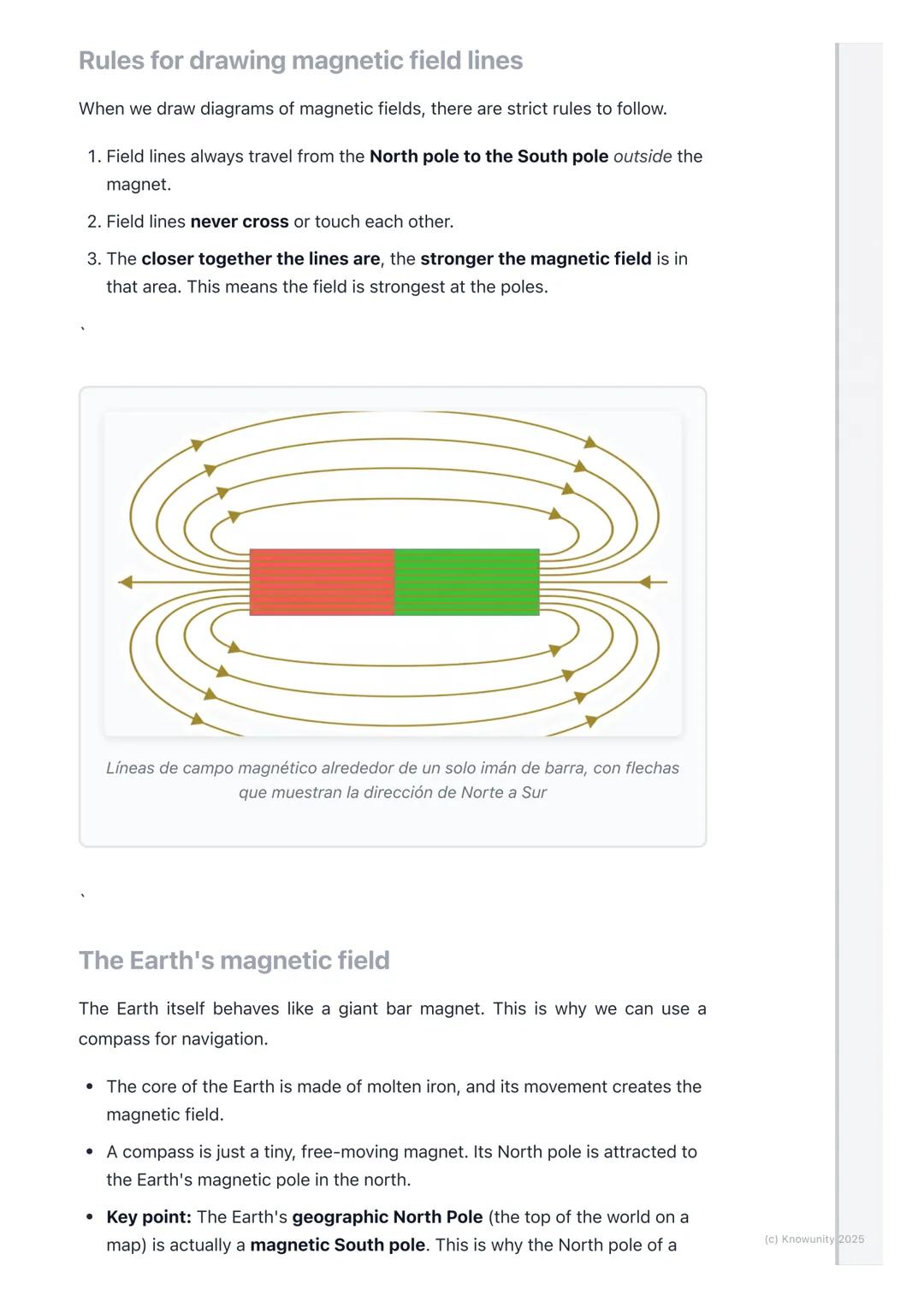
Drawing Magnetic Fields Like a Pro
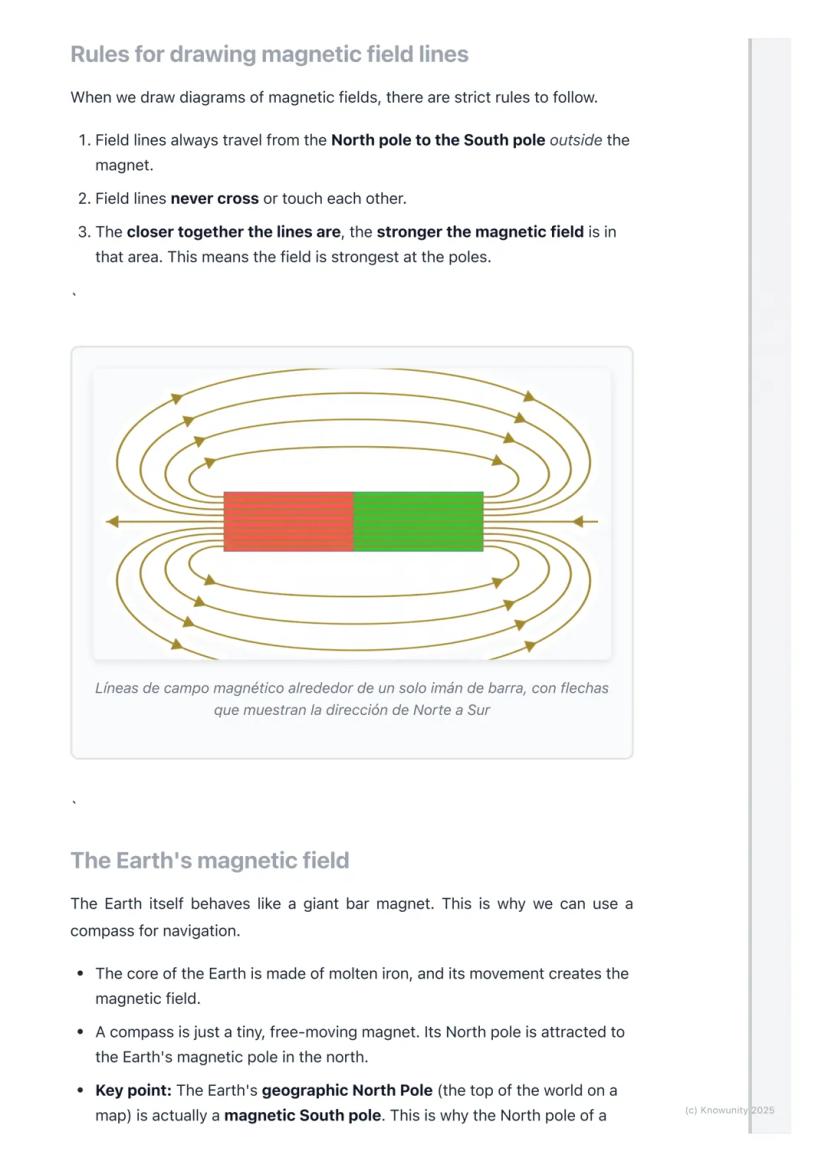
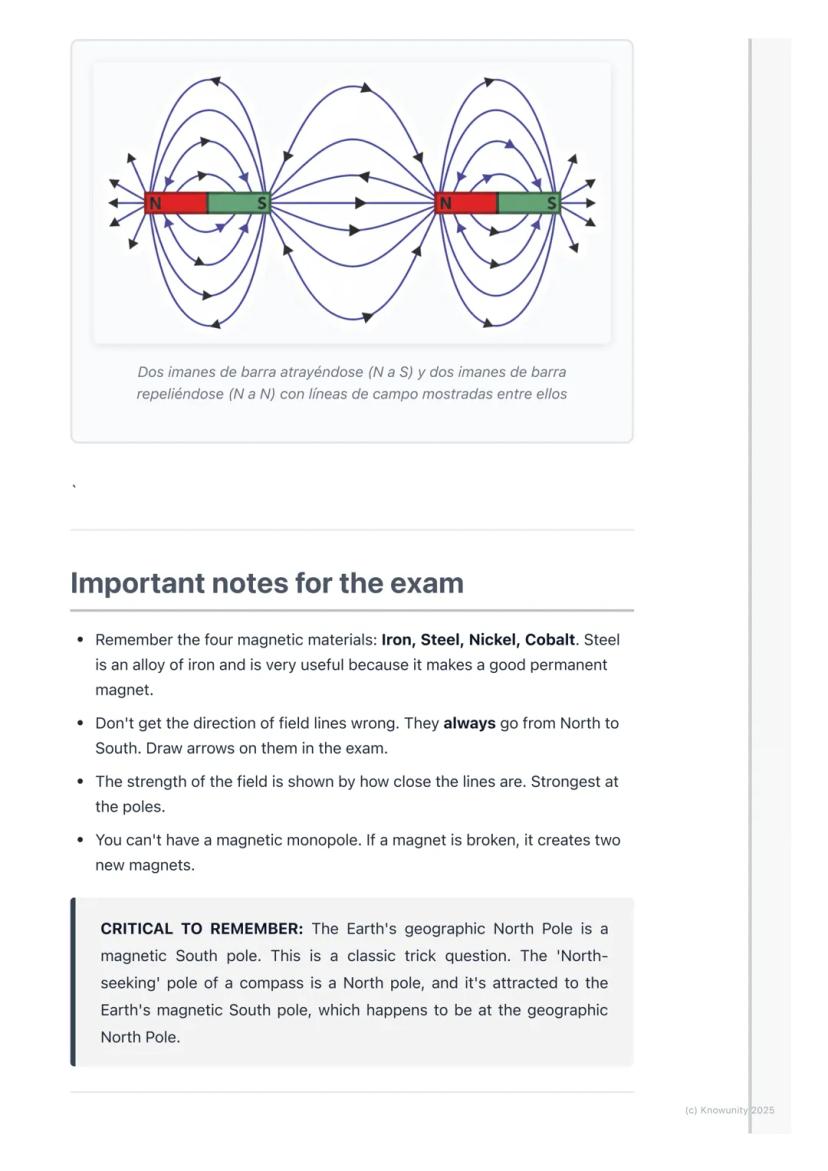
When you're sketching magnetic field diagrams, there are three non-negotiable rules. Field lines always travel from North to South outside the magnet, they never cross each other, and closer lines mean a stronger field.
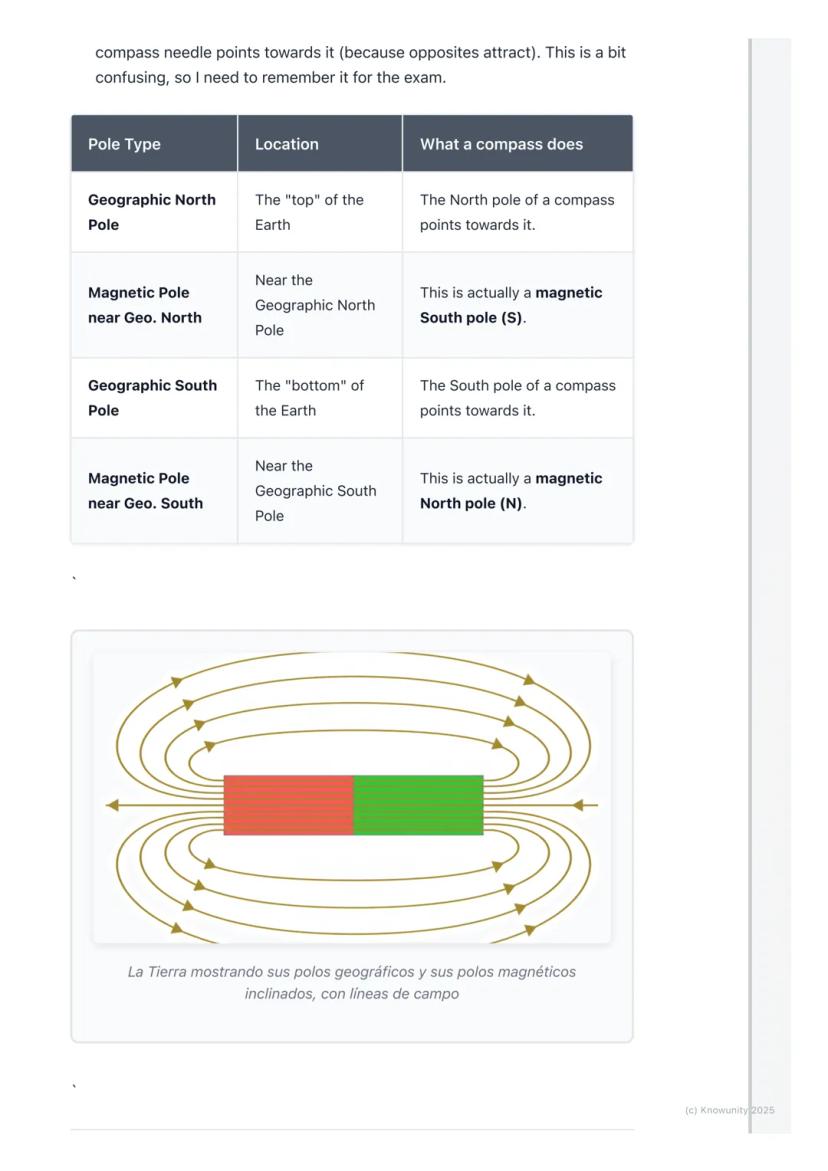
The Earth's magnetic field is basically our planet acting like a massive bar magnet. The molten iron core creates this field, which is why compasses work for navigation.
Here's the tricky bit that catches loads of students: Earth's geographic North Pole (the top on maps) is actually a magnetic South pole. That's why the North end of a compass needle points towards it - opposites attract, remember?
Exam alert: This Earth's pole confusion is a classic trick question - don't let it catch you out!
4
of 7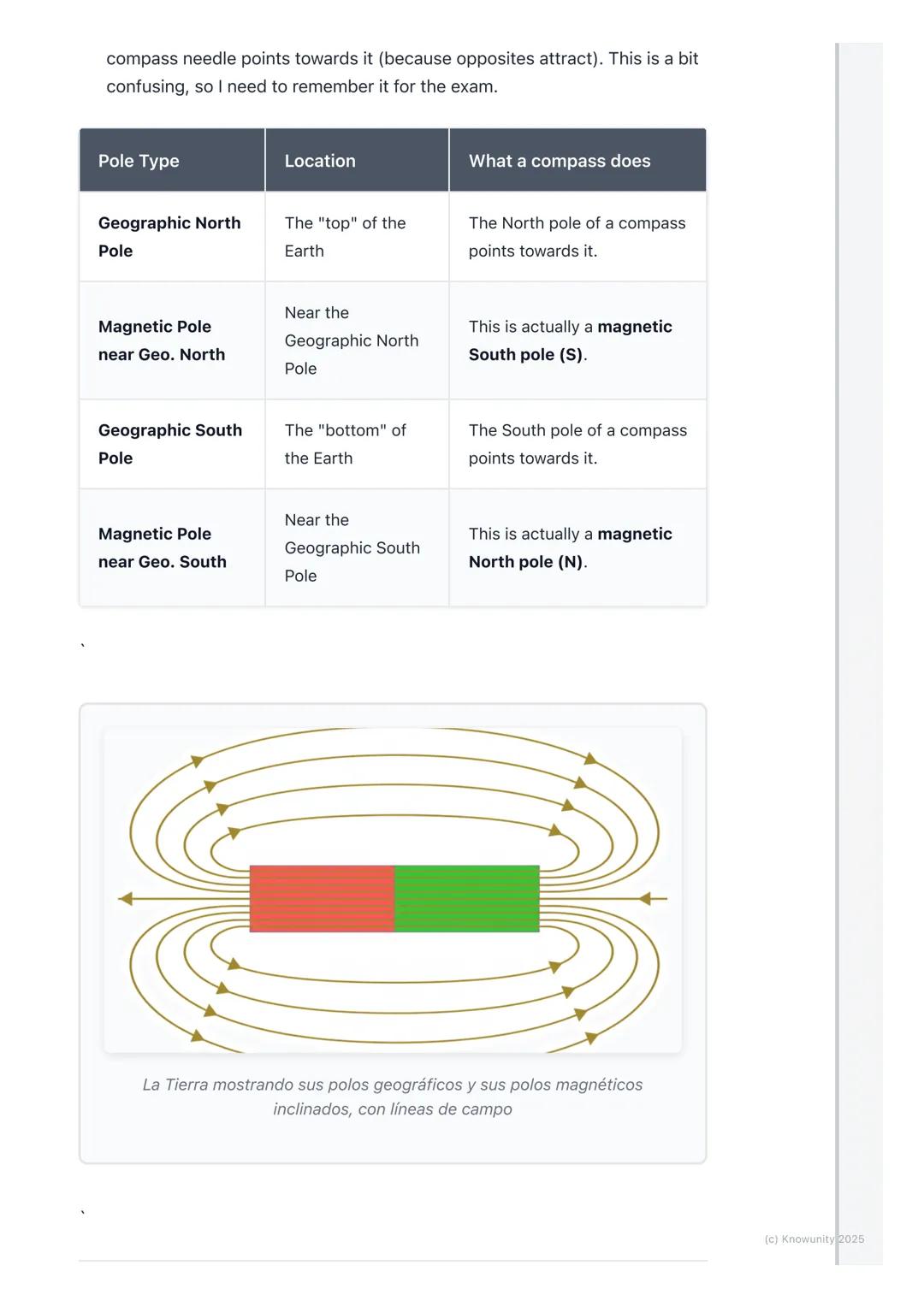
Real-World Applications You Need to Know
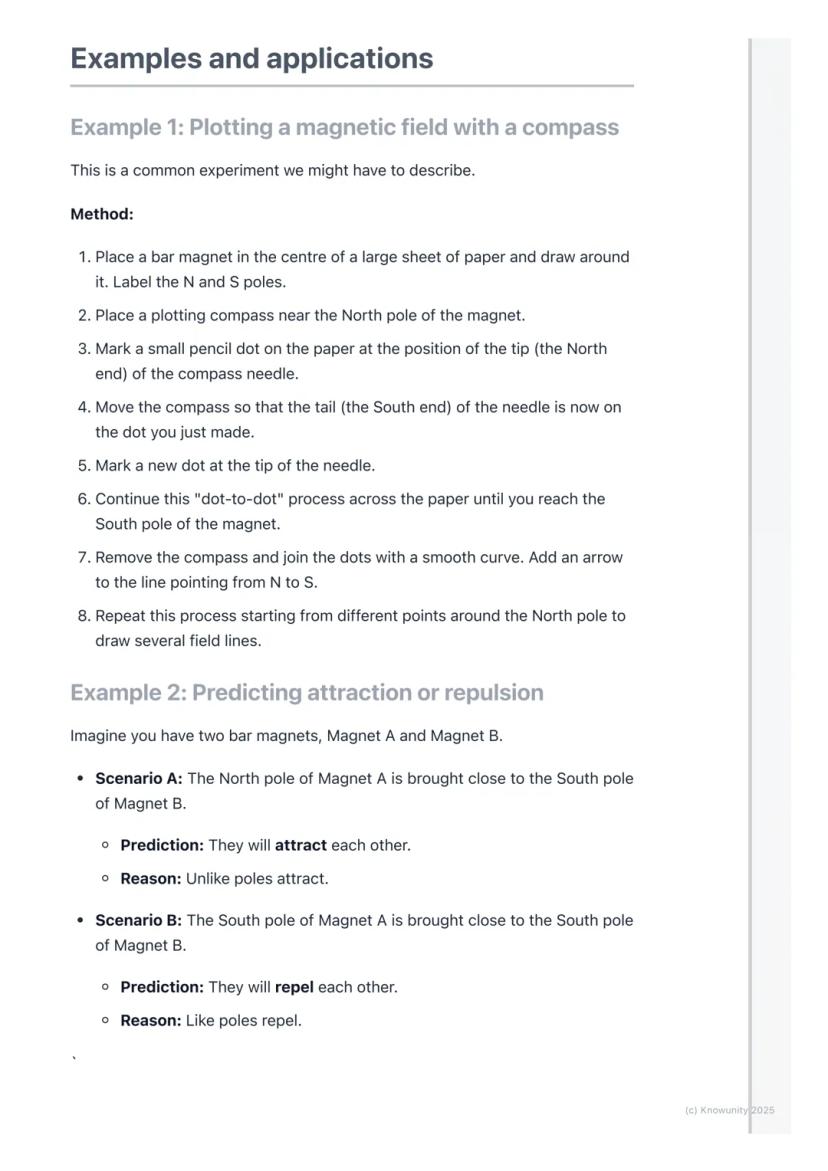
The compass plotting experiment is dead likely to appear in your exam. You place a plotting compass near a magnet's North pole, mark where the needle points, then move the compass so its tail sits on that mark. Keep going dot-to-dot until you reach the South pole, then join the dots with arrows pointing N to S.
Let's practice predicting what happens when magnets meet. If you bring the North pole of one magnet near the South pole of another, they'll attract because unlike poles attract. But bring two North poles together? They'll repel each other with surprising force.
The four magnetic materials - iron, steel, nickel, and cobalt - are essential to memorise. Steel makes brilliant permanent magnets because it holds its magnetism really well.
Pro tip: In field line drawings, always add arrows showing the N→S direction, and remember that poles are where lines are most crowded together!
5
of 7
6
of 7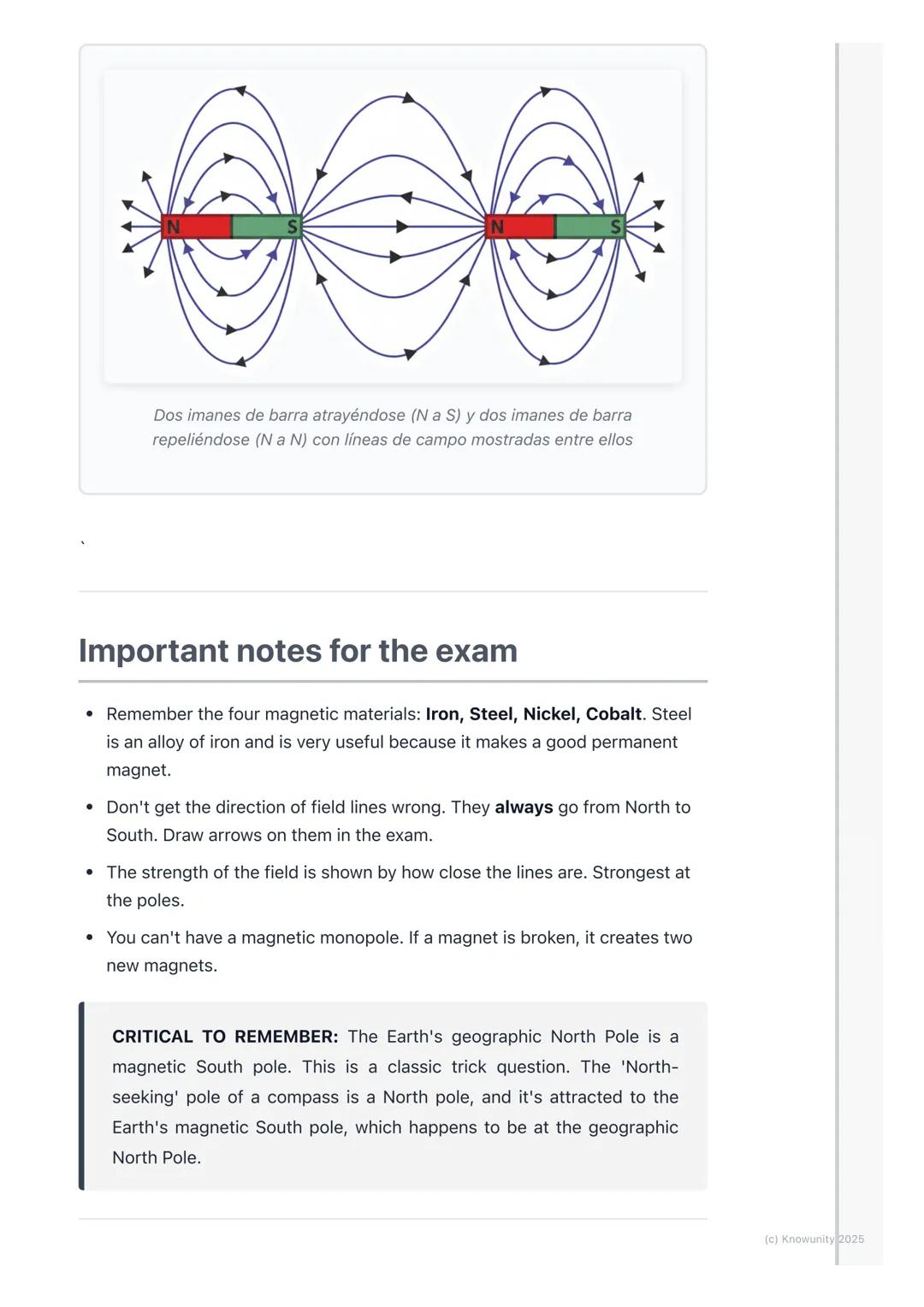
7
of 7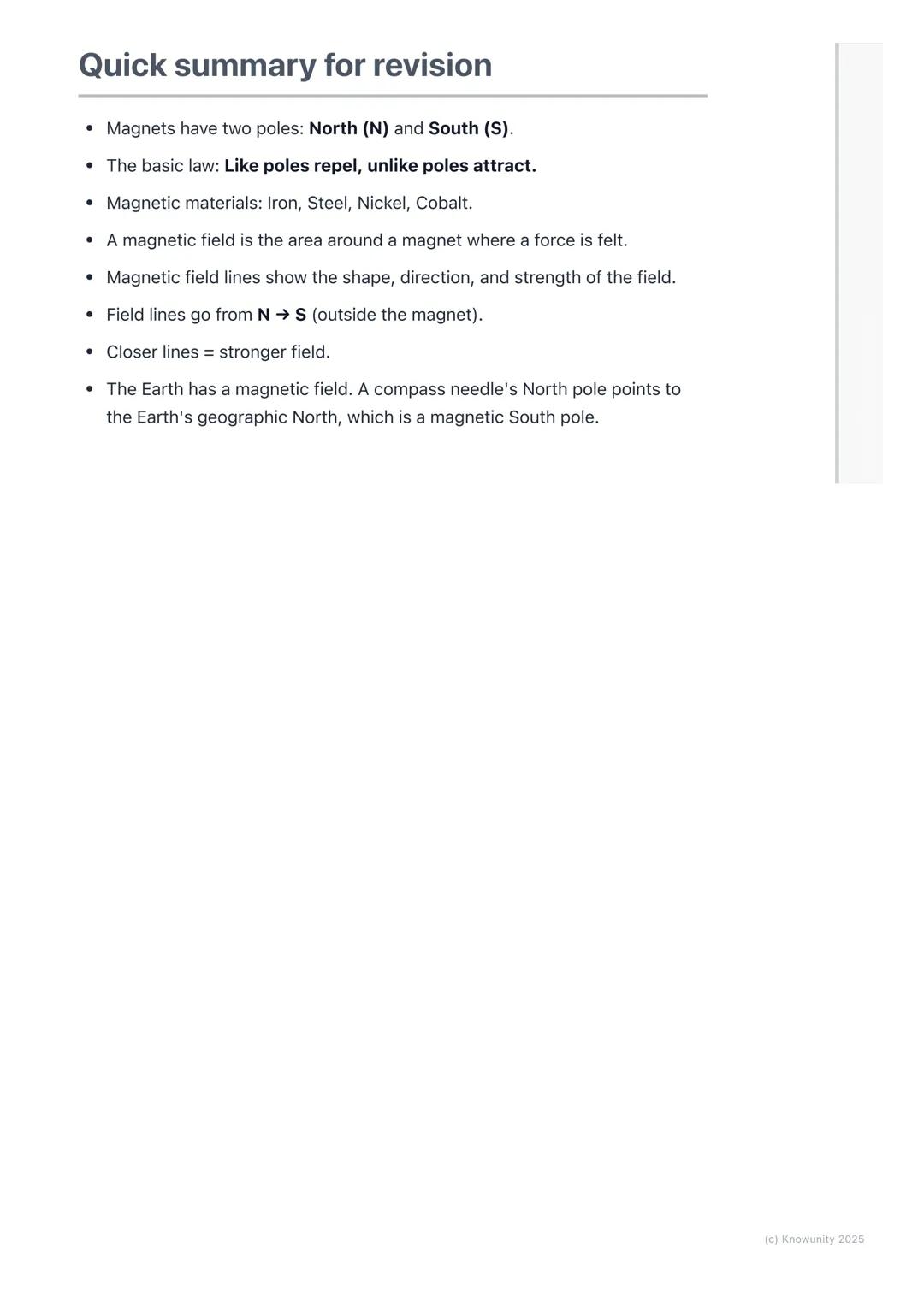
Si on te demande...
Qu'est-ce que le compagnon IA de Knowunity ?
Notre compagnon IA est spécialement conçu pour répondre aux besoins des étudiants. Sur la base des millions d'éléments de contenu que nous avons sur la plateforme, nous pouvons fournir des réponses vraiment significatives et pertinentes aux étudiants. Mais il ne s'agit pas seulement de réponses, le compagnon a encore plus pour but de guider les élèves dans leurs défis d'apprentissage quotidiens, avec des plans d'étude personnalisés, des quiz ou des éléments de contenu dans le chat et une personnalisation à 100% basée sur les compétences et les développements de l'étudiant.
Où puis-je télécharger l'appli Knowunity ?
Tu peux télécharger l'application dans Google Play Store et dans l'App Store d'Apple.
L'application est-elle vraiment gratuite ?
Oui, tu as un accès entièrement gratuit à tous les contenus de l'appli, tu peux chatter ou suivre les créateurs à tout moment. De plus, nous proposons Knowunity Premium, qui te permet de réviser sans limites!
Contenus les plus populaires en Physics
3Contenus les plus populaires
9Rien ne te convient ? Explore d'autres matières.
Les étudiants nous adorent — il ne manque plus que toi.
4.6/5App Store
4.7/5Google Play
L'application est très facile d'utilisation et bien conçue. Jusqu'à présent, j'ai trouvé tout ce que je cherchais et j'ai pu apprendre beaucoup de choses grâce aux présentations ! Je vais certainement utiliser l'application pour un travail en classe ! Et comme source d'inspiration personnelle, elle est bien sûr aussi très utile.
Stefan Sutilisateur iOS
Cette application est vraiment super. Il y a tellement de fiches de révision et d'aide, [...]. Par exemple, la matière qui me pose problème est le français et l'appli a un choix d'aide très large. Grâce à cette application, je me suis améliorée en français. Je la recommanderais à tout le monde.
Samantha Klichutilisatrice Android
Waouh, je suis vraiment abasourdi. J'ai essayé l'application parce que je l'avais déjà vue plusieurs fois dans la publicité et j'ai été absolument choquée. Cette appli est L'AIDE dont on rêve pour l'école et surtout, elle propose tellement de choses, comme des rédactions et des fiches qui m'ont personnellement TRÈS bien aidé.
Annautilisatrice iOS
Physics1 vues·Mis à jour May 31, 2026·7 pagesUnderstanding Magnets and Magnetic Fields
Ever wondered why your fridge door stays shut or how a compass knows which way is north? It's all down to magnetism - one of the most useful invisible forces in our world. Understanding magnets isn't just about sticking things... Affiche plus
1
of 7Inscris-toi pour voir le contenu. C'est gratuit!
- Accès à tous les documents
- Améliore tes notes
- Rejoins des millions d'étudiants
What Are Magnets and Magnetic Fields?
You're surrounded by magnets every day, from your phone's speakers to the motor in your washing machine. Magnets are objects that create an invisible force field around them, and this magnetic field can attract certain materials or push other magnets away.
The really important stuff to remember: magnets have two magnetic poles - a North pole (N) and a South pole (S) - where the magnetic force is strongest. Only four materials are naturally magnetic materials: iron, steel, nickel, and cobalt. Everything else like plastic, wood, or copper? Completely unaffected by magnets.
Magnetic field lines are how we draw the invisible field to see what's happening. Think of them as the paths that show where the magnetic force is acting and how strong it is.
Quick tip: Steel is just iron mixed with other elements, which is why it's magnetic too - perfect for making strong permanent magnets!
2
of 7Inscris-toi pour voir le contenu. C'est gratuit!
- Accès à tous les documents
- Améliore tes notes
- Rejoins des millions d'étudiants
The Golden Rules of Magnetism
Here's where magnetism gets predictable, and these rules will save you in every exam. Like poles repel (N pushes away N, S pushes away S) and unlike poles attract (N pulls towards S). It's that simple, but it explains everything magnets do.
Here's something that might blow your mind: if you snap a bar magnet in half, you don't get separate N and S pieces. Instead, you get two complete magnets, each with their own North and South poles. You can never isolate a single pole on its own.
We can actually see magnetic fields by sprinkling iron filings around a magnet - they line up along the invisible field lines like magic. Alternatively, you can use a small compass to trace the field lines one by one.
Remember this: The closer together the field lines are drawn, the stronger the magnetic force is in that spot!
3
of 7Inscris-toi pour voir le contenu. C'est gratuit!
- Accès à tous les documents
- Améliore tes notes
- Rejoins des millions d'étudiants
Drawing Magnetic Fields Like a Pro
When you're sketching magnetic field diagrams, there are three non-negotiable rules. Field lines always travel from North to South outside the magnet, they never cross each other, and closer lines mean a stronger field.
The Earth's magnetic field is basically our planet acting like a massive bar magnet. The molten iron core creates this field, which is why compasses work for navigation.
Here's the tricky bit that catches loads of students: Earth's geographic North Pole (the top on maps) is actually a magnetic South pole. That's why the North end of a compass needle points towards it - opposites attract, remember?
Exam alert: This Earth's pole confusion is a classic trick question - don't let it catch you out!
4
of 7Inscris-toi pour voir le contenu. C'est gratuit!
- Accès à tous les documents
- Améliore tes notes
- Rejoins des millions d'étudiants
Real-World Applications You Need to Know
The compass plotting experiment is dead likely to appear in your exam. You place a plotting compass near a magnet's North pole, mark where the needle points, then move the compass so its tail sits on that mark. Keep going dot-to-dot until you reach the South pole, then join the dots with arrows pointing N to S.
Let's practice predicting what happens when magnets meet. If you bring the North pole of one magnet near the South pole of another, they'll attract because unlike poles attract. But bring two North poles together? They'll repel each other with surprising force.
The four magnetic materials - iron, steel, nickel, and cobalt - are essential to memorise. Steel makes brilliant permanent magnets because it holds its magnetism really well.
Pro tip: In field line drawings, always add arrows showing the N→S direction, and remember that poles are where lines are most crowded together!
5
of 7Inscris-toi pour voir le contenu. C'est gratuit!
- Accès à tous les documents
- Améliore tes notes
- Rejoins des millions d'étudiants
6
of 7Inscris-toi pour voir le contenu. C'est gratuit!
- Accès à tous les documents
- Améliore tes notes
- Rejoins des millions d'étudiants
7
of 7Inscris-toi pour voir le contenu. C'est gratuit!
- Accès à tous les documents
- Améliore tes notes
- Rejoins des millions d'étudiants
Si on te demande...
Qu'est-ce que le compagnon IA de Knowunity ?
Notre compagnon IA est spécialement conçu pour répondre aux besoins des étudiants. Sur la base des millions d'éléments de contenu que nous avons sur la plateforme, nous pouvons fournir des réponses vraiment significatives et pertinentes aux étudiants. Mais il ne s'agit pas seulement de réponses, le compagnon a encore plus pour but de guider les élèves dans leurs défis d'apprentissage quotidiens, avec des plans d'étude personnalisés, des quiz ou des éléments de contenu dans le chat et une personnalisation à 100% basée sur les compétences et les développements de l'étudiant.
Où puis-je télécharger l'appli Knowunity ?
Tu peux télécharger l'application dans Google Play Store et dans l'App Store d'Apple.
L'application est-elle vraiment gratuite ?
Oui, tu as un accès entièrement gratuit à tous les contenus de l'appli, tu peux chatter ou suivre les créateurs à tout moment. De plus, nous proposons Knowunity Premium, qui te permet de réviser sans limites!
Contenus les plus populaires en Physics
3Contenus les plus populaires
9Rien ne te convient ? Explore d'autres matières.
Les étudiants nous adorent — il ne manque plus que toi.
4.6/5App Store
4.7/5Google Play
L'application est très facile d'utilisation et bien conçue. Jusqu'à présent, j'ai trouvé tout ce que je cherchais et j'ai pu apprendre beaucoup de choses grâce aux présentations ! Je vais certainement utiliser l'application pour un travail en classe ! Et comme source d'inspiration personnelle, elle est bien sûr aussi très utile.
Stefan Sutilisateur iOS
Cette application est vraiment super. Il y a tellement de fiches de révision et d'aide, [...]. Par exemple, la matière qui me pose problème est le français et l'appli a un choix d'aide très large. Grâce à cette application, je me suis améliorée en français. Je la recommanderais à tout le monde.
Samantha Klichutilisatrice Android
Waouh, je suis vraiment abasourdi. J'ai essayé l'application parce que je l'avais déjà vue plusieurs fois dans la publicité et j'ai été absolument choquée. Cette appli est L'AIDE dont on rêve pour l'école et surtout, elle propose tellement de choses, comme des rédactions et des fiches qui m'ont personnellement TRÈS bien aidé.
Annautilisatrice iOS